Your marine electrical system is one of the most critical safety systems on your boat. At the center of that system are marine electrical panels, which control how power is distributed, protected, and managed throughout the vessel. If a panel is outdated, improperly installed, or poorly maintained, it can cause equipment failure, rapid battery drain, electrical corrosion, or even onboard fire.
The good news is that marine DC systems are not overly complicated once you understand how they are designed to work. By learning the fundamentals of marine electrical panels, circuit protection, and proper wiring practices, you can make informed upgrade decisions, identify problems early, and maintain a safer boat.
This guide explains marine electrical panels and DC systems. Whether you operate a small fishing boat, a family cruiser, or a commercial vessel, understanding how power flows and how it is protected is essential for reliability and safety on the water
What Is a Marine Electrical Panel

A marine electrical panel is the central hub that controls and distributes power on your boat. It takes electricity from the battery bank and routes it to every circuit, including lights, pumps, electronics, and navigation equipment.
It works like the breaker panel in your home, but it is built for life on the water. Marine panels use tinned copper bus bars, corrosion-resistant hardware, and ignition-protected components that stay safe near fuel vapors. They are designed to handle constant vibration that would quickly damage a household panel.
The panel does two things: it distributes power to each circuit, and it protects each circuit with a breaker or fuse so that a fault shuts the circuit down before anything gets damaged or catches fire.
Go2Marine stocks a wide range of marine electrical panels from trusted brands built to ABYC safety standards.
How a Marine DC Electrical System Works
Most recreational boats run on a 12-volt DC (direct current) system, the same type of power a battery produces. Larger or power-hungry vessels often use 24 volts for better efficiency over longer wire runs. Here is how power flows through a typical marine DC system:
-
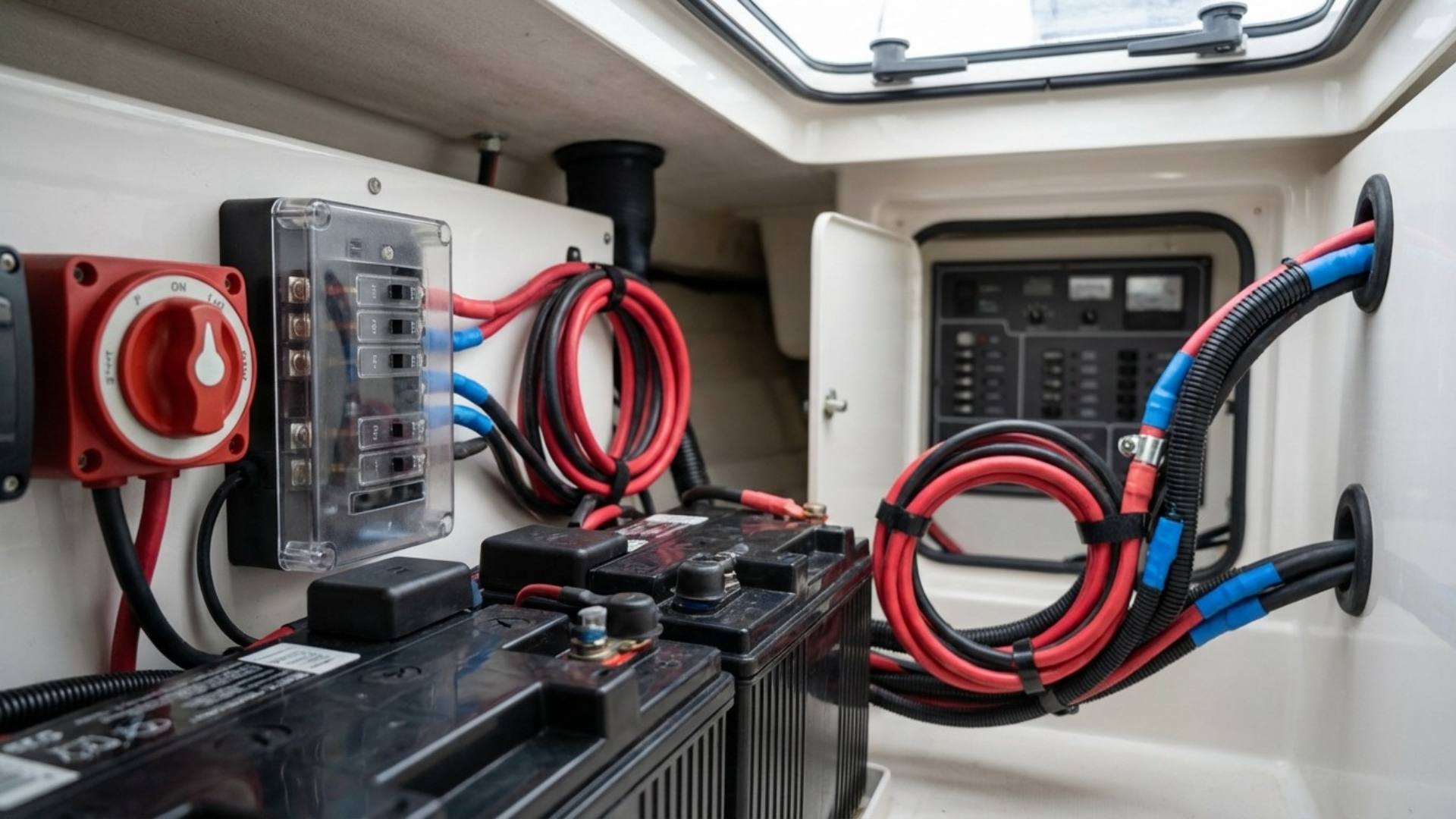
Battery bank: Stores energy. Gets recharged by the engine alternator, a shore power charger, or solar panels.
-
Battery switch: Connects or disconnects the batteries from the whole system. Turn it off when the boat is stored or in an emergency.
-
Main fuse or breaker: Located as close to the battery as possible. Protects the whole system from a short circuit.
-
Distribution panel: Splits the power into individual branch circuits, each with its own breaker or fuse.
-
Bus bars: Copper bars inside the panel where all the positive and negative wires connect.
-
Loads: Every piece of equipment on the boat, including lights, pumps, radios, and GPS units, draws power through its own circuit.
This layout is important. If one circuit faults, only that circuit shuts off. The rest of the boat keeps running. It also makes troubleshooting much easier since you can isolate circuits one at a time.
Voltage Drop: Why Wire Size Matters
Voltage drop is the loss of power as electricity travels through a wire. The longer the run and the higher the current, the more voltage is lost. Too much drop means lights go dim, motors run hot, and electronics behave strangely.
The American Boat and Yacht Council (ABYC) recommends no more than 3 percent voltage drop for critical systems like navigation lights and bilge pumps. The fix is using the right wire gauge. Thicker wire has lower resistance and less loss. Always use an ABYC wire sizing chart when planning or replacing circuits.
Types of Marine Electrical Panels
AC and DC Combination Panels
Cruising boats and larger powerboats often carry both AC and DC power. AC comes from shore power or a generator. DC comes from the battery bank. A combination panel manages both in a single enclosure, saving space and keeping wiring organized. These panels include galvanic isolators to protect underwater metal fittings from corrosion when connected to shore power.
DC-Only Panels

Smaller fishing boats, day cruisers, and runabouts usually run on DC only. A DC-only panel is simple and cost-effective, ranging from a 6-circuit fuse block for basic boats up to a 30-circuit panel with built-in volt and amp meters for well-equipped cruisers.
Browse DC marine distribution panels at Go2Marine to find the right fit for your vessel.
Circuit Breakers and Fuses: Protecting Every Circuit
Every circuit needs protection against too much current. When more current flows through a wire than it can handle, the wire heats up. If it gets hot enough, it melts the insulation and starts a fire. Breakers and fuses both prevent this, but in different ways.
Circuit Breakers

A breaker is a resettable switch that trips automatically when the current exceeds its rating. Once the fault is fixed, you reset it, and the circuit works again. Breakers also act as on/off switches for each circuit, which is convenient for managing equipment on the water.
ABYC standards require trip-free breakers for most marine applications. A trip-free breaker cannot be held on during a fault, which is a critical safety requirement.
Shop marine circuit breakers at Go2Marine, including trusted options from Blue Sea Systems and Ancor.
Fuses

Fuses work by melting when too much current flows, permanently breaking the circuit. They respond faster than breakers and are ideal for main battery cable protection and in-line applications. Common types include ANL fuses for high-amperage main circuits and blade fuses for smaller branch circuits.
ABYC Rule: Overcurrent protection must be installed within 7 inches of the battery terminal, or within 40 inches if the wire is fully enclosed in conduit or a protective casing. This is one of the most commonly missed requirements on boats.
Go2Marine stocks https://www.go2marine.com/collections/electrical-panels-and-parts for all amperage ranges, from small blade fuses to large ANL fuses.
Marine Wiring: Getting It Right

Always Use Marine-Grade Wire
Never use automotive or household wire on a boat. Marine-grade wire uses finely stranded, tinned copper conductors. The tinning protects against air and moisture that quickly corrode bare copper and cause connections to fail.
Corroded wire raises resistance, increases voltage drop, causes equipment to run poorly, and can generate enough heat to start a fire.
Shop marine wire and boat cable at Go2Marine.
Follow the ABYC Wire Color Code
Consistent wire colors make repairs far safer and faster. ABYC recommends these standards for DC systems:
-
Red: positive DC conductors
-
Black or Yellow: DC negative return
-
Green or Green with Yellow Stripe: DC safety ground
-
Dark Gray: navigation lights and tachometer
-
Brown: bilge blowers and cabin lights
-
Orange: accessory feeds from fuse panel
-
Purple: ignition and instrument feeds
-
Yellow with Red Stripe: starting circuit to the starter motor
Following these color codes throughout your boat makes tracing wires and connecting new equipment much safer and faster.
Marine Electrical Safety: What Every Boat Owner Must Know
Preventing Electrical Fires
Electrical fires are among the top causes of serious boat damage and sinkings. Most are preventable with regular care and proper installation. Key steps to take:
-
Inspect all wiring at least once a year. Look for cracked insulation, corroded terminals, and loose connections.
-
Never upsize a breaker to stop it from tripping. A tripping breaker means a real fault exists. Find and fix the cause.
-
Use marine-grade wire for all new wiring and repairs.
-
Route wires through grommets and conduit to protect them from chafe on sharp edges.
-
Install a battery disconnect switch so you can cut all power in an emergency.
-
Run your bilge blower for at least four minutes before starting a gasoline engine to clear fuel vapors.
Stray Current Corrosion
Stray current corrosion occurs when small DC leakage currents travel through the water around your boat and attack metal underwater fittings. Propellers, shafts, and through-hulls can be destroyed in weeks if this problem goes undetected.
Keep negative return wiring properly sized and in good condition. Never use the hull or structural parts as a ground path. Test periodically for stray current with a multimeter. Install a galvanic isolator when connected to shore power.
Shore Power Safety
Connecting to marine shore power brings 120V or 240V AC onto your boat. Handle it carefully every time:
-
Connect the shore power cord to the boat first, then plug into the dock pedestal. Disconnect in reverse.
-
Inspect your cord and inlet for heat discoloration, melting, or corrosion before each use.
-
Install a reverse polarity indicator on your AC panel to alert you if the marina outlet is miswired, which creates a serious shock hazard.
Installing or Upgrading Your Marine Electrical Panel
Start with a Load Calculation
Before buying a new panel or adding circuits, add up the current draw of all your equipment, including both steady running loads and short peak loads like starter motors. This tells you the minimum capacity your panel, wiring, and battery bank must support.
Choose the Right Location
Mount the panel in a dry, well-ventilated spot that is easy to reach quickly. Keep it away from hatches and portlights where water can drip in. Good airflow prevents moisture from building up inside the enclosure.
Label Everything and Keep a Diagram
Label every circuit clearly on the panel face. Create a simple wiring diagram listing each circuit, its wire gauge, breaker rating, and the equipment it powers. Keep a copy on the boat. It is one of the most useful documents you will have when something stops working.
When to Call a Professional
Many DC wiring tasks are manageable for a careful boat owner. But AC system work, high-amperage battery wiring, and anything affecting safety systems should go to a certified marine electrician. The NMEA and ABYC both maintain directories of qualified technicians.
Final Thoughts: Protect Your Boat With a Safe Electrical System
Your marine electrical panel is the command center of your boat’s DC system. It controls how power moves from the battery bank to critical equipment such as navigation lights, bilge pumps, radios, and onboard electronics. When marine electrical panels are properly installed, correctly sized, and regularly maintained, they provide stable power distribution and essential circuit protection that keeps your vessel operating safely.
Electrical failures rarely happen without warning. Corrosion, undersized wiring, overloaded circuits, and improper breaker sizing all create stress within a marine DC system long before a major problem appears. By using marine-grade tinned copper wire, sizing breakers to protect the conductor, not just the equipment, following ABYC E-11 standards, and performing seasonal inspections, you significantly reduce the risk of fire, voltage drop issues, and unexpected system shutdowns.
Clear labeling, accurate wiring diagrams, and proper overcurrent protection near the battery are not optional details; they are foundational safety practices. Whether you operate a small recreational boat or a heavily equipped offshore vessel, disciplined electrical installation and maintenance habits prevent the most common and costly failures seen in marine environments.
A well-designed marine electrical system does more than power equipment. It protects your investment, supports safe navigation, and ensures that when you turn a switch, your boat responds exactly as it should, every time you head out on the water.
Go2Marine has everything you need to upgrade and maintain your boat's electrical system. Shop marine electrical panels, circuit breakers, marine wire and cable, fuse blocks, and shore power equipment from trusted brands.