
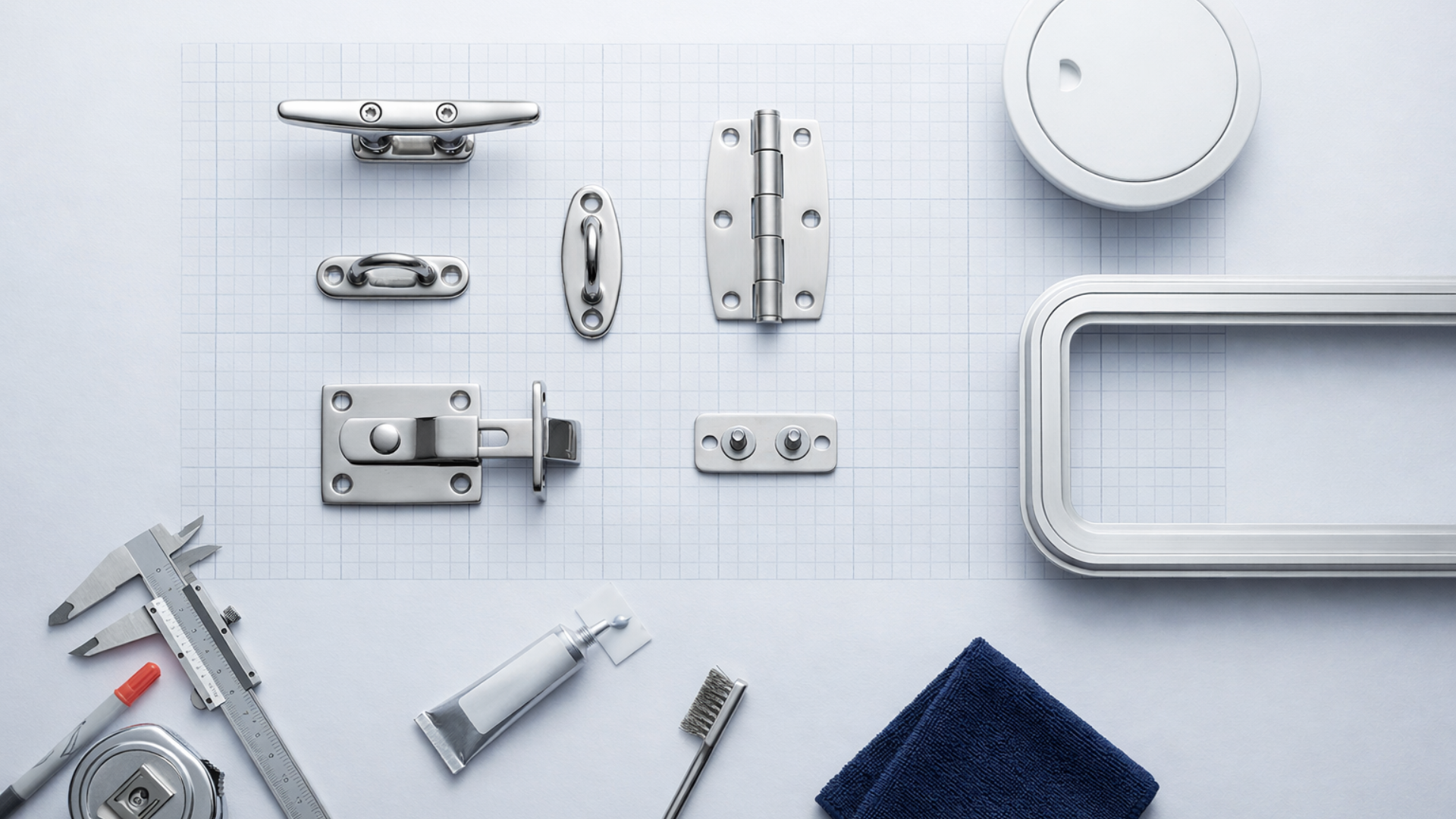
If you own a boat, the metal parts on your deck are more important than you think. Marine deck fittings, boat hatches, and marine railing systems keep your boat safe and working properly. They hold your boat to the dock, let you get below deck, and keep people from falling overboard. The key is choosing hardware that resists corrosion and holds up well in saltwater environments.
We've been helping boat owners for over 20 years, and I've seen what happens when people buy cheap hardware from regular stores. It can corrode quickly in marine environments, which may create safety risks over time. This guide will show you how to pick the right marine hardware, install it correctly, and keep it in good shape for years.
What Is Marine Hardware?
Marine hardware refers to corrosion-resistant metal parts used on boats to hold things in place, provide access, and keep people safe. This includes boat deck fittings, boat hatches, marine hatch covers, and marine rail systems. These aren't regular hardware from home improvement stores; they're specially made from metals that handle saltwater, sun damage, and constant wetness without falling apart.
Marine Deck Fittings Explained
Boat deck fittings are strong, corrosion-resistant metal components mounted to your deck to secure dock lines, anchor ropes, fenders, and other equipment. Common examples include cleats, pad eyes, chocks, and hinges. These fittings must handle constant pull, vibration, and exposure to water, which is why choosing the right material and installing them properly is essential for safety and long-term durability, especially in saltwater environments.
Common Types of Marine Deck Fittings
1. Marine Cleats

Marine cleats and bollards are deck- and dock-mounted fittings used to secure mooring lines and lash down equipment or cargo. Marine cleats are typically T-shaped and come in horn cleats (classic T-shape), pull-up cleats that fold flat, and pop-up cleats that spring up when needed. They can be bolted or welded in place and are made from materials such as stainless steel, aluminum, galvanized steel, bronze, brass, and nylon. Your cleat needs to handle more than just your boat’s weight, as wind, waves, and tides can increase pulling force by three to five times. For deck-mounted cleats, always use through-bolting with proper backing plates underneath.
2. Pad Eye

Pad eyes are heavy-duty metal loops for attaching hooks or ropes. They spread heavy pulling forces across your deck through their wide base. Pick pad eyes rated for at least twice the weight you expect, and bolt them over strong parts of your boat's structure with big backing plates.
3. Chocks

Chocks guide ropes from cleats to the water, preventing rope wear and protecting your boat's finish. Place them so the ropes run as straight as possible to reduce friction.
4. Hinges

Hinges let hatches and doors open and close smoothly. Never use regular house hinges, as they can corrode quickly in marine environments. Marine hinges are typically made from stainless steel, but can also be brass or chrome-plated depends on the application. Apply sealant around all mounting holes during installation to help prevent corrosion and water damage.
5. Latches

Latches keep hatches and doors closed tight. Go2Marine stocks slam latches, cam latches, and locking latches, all with 316 stainless steel parts that resist corrosion.
6. Backing Plates

Backing Plates are flat metal pieces that sit underneath your deck fittings to spread out pulling forces. Use plates at least twice as long and half as wide as your cleats. Bigger is always better for safety.
How to Choose the Right Boat Cleat Size
Choosing the right cleat size starts with understanding your boat and the conditions where you dock.
Bigger boats usually need bigger cleats because they put more pull on the lines when tied up. If your boat stays in a place with strong wind, waves, or current, you may also need stronger cleats than someone in a calm marina.
It’s also important to match the cleat to the size of your dock lines. Thicker ropes need longer cleats so you can tie them properly and securely.
If you’re unsure, it’s safer to choose a slightly larger cleat and make sure it’s installed the right way with bolts and a backing plate underneath. A well-installed cleat that’s strong enough for your boat will give you peace of mind when docking.
When in doubt, check your boat’s manual or ask a marine hardware specialist before installing.
At Go2Marine, we carry a wide range of marine cleats in different sizes and materials, so you can choose the right fit for your boat and the conditions where you dock.
How to Install Marine Deck Hardware Properly
Installing marine deck hardware correctly isn’t complicated, but it has to be done right. Even strong boat deck fittings can loosen or leak if they aren’t mounted and sealed properly. Using through-bolts, backing plates, and marine-grade sealant ensures your hardware stays secure, watertight, and ready to handle real-world loads, especially in saltwater conditions.
1. Through-Bolting vs Screws
Always use through-bolts (bolts that go all the way through with nuts on the bottom) for important hardware like cleats and rail posts. They're 5-10 times stronger than screws. Through-bolts let you use backing plates, and you can check them from below. Only use screws for very light items, never for safety equipment.
2. Using Backing Plates for Boat Hardware
Backing plates spread forces across a bigger area and prevent deck damage. Use 316 stainless steel or aluminum plates. Put marine sealant between the plate and deck to stop water and prevent corrosion.
3. Marine-Grade Sealants
Use polyurethane sealants (like 3M 5200 or 4200) for deck hardware. Apply sealant under fittings and around all bolt holes before installing. Never skip this step; proper sealing prevents water damage and deck rot.
4. Preventing Water Intrusion
Water leaking through hardware holes is a main cause of deck damage. Drill holes slightly smaller than your bolt size, put sealant inside all holes before inserting bolts, and check seals every year. Warning signs include soft spots around hardware, cracked sealant, or water stains below deck.
Boat Hatches & Marine Hatch Covers

Boat hatches are deck openings with sealed lids that provide ventilation, natural light, and access to areas below deck. A properly designed marine hatch cover helps keep water out while allowing easy entry to cabins, storage spaces, or equipment compartments. Because hatches are exposed to sun, foot traffic, and constant moisture, choosing durable materials and installing them correctly is essential to prevent leaks and long-term water damage. Quality brands like Bomar, Freeman, Tempress, and Baier make hatches that resist sun damage, seal tight, and hold up when people walk on them.
Types of Boat Hatches
1. Flush Deck Hatch: Sits almost flat with your deck when closed. Great for high-traffic areas and fishing boats. Water resistance is good to excellent.
2. Hinged Hatch: Opens upward on hinges and can be secured in the open position for ventilation and easy access. Common on-deck entries and storage compartments. Provides reliable sealing when closed and convenient access when open.
3. Inspection Hatch: Smaller hatches for reaching storage, tanks, and equipment. Water resistance varies.
4. Watertight Hatch: Meets strict standards for keeping water out even when underwater. Required for offshore and commercial boats.
How to Measure and Replace a Boat Hatch
Boat hatches can be measured three ways: cutout size (the hole in the deck), overall length and width, and clear opening (the usable opening space). Most advertised hatches are sized by the clear opening, so always confirm which measurement is being referenced before purchasing. In most cases, you do not need to remove the old hatch to measure the cutout. Measure carefully in multiple spots and use the smallest dimensions. Check your deck thickness for flush-mount installations. When replacing the hatch, remove all old sealant, apply fresh sealant under the rim and around bolt holes, and tighten stainless steel bolts evenly in a star pattern. For proper installation, use marine-grade fasteners and hardware available in Go2Marine’s deck hardware collection.
Marine Rail Systems & Boat Railing Hardware
Marine rail systems are an important safety feature on many boats. They help prevent falls, provide support while moving around on deck, and add strength along open edges. Choosing the right marine rail systems and boat railing hardware ensures your rails stay secure, resist corrosion, and hold up in both freshwater and saltwater conditions.
What Are Marine Rail Systems?

Marine rail systems are the complete assemblies of rails, posts, and connecting pieces that create safety barriers around your deck. They must handle people leaning on them while resisting saltwater, sun, and temperature extremes.
Types of Marine Rail Systems
1. Stainless Steel Rail Systems: Most popular because they're strong, resist corrosion, and look good. Rinse with fresh water regularly and polish occasionally with marine stainless steel cleaner.
2. Aluminum Railing Systems: Lighter than stainless steel (about one-third the weight) but require proper coatings or anodizing to resist corrosion in marine environments.
3. Modular Rail Fittings: Standard parts that let you build custom layouts. Available at Go2Marine, including base plates, elbows, T-connectors, and end caps.
How to Prevent Corrosion on Marine Hardware
Corrosion is one of the biggest reasons marine hardware fails over time. Saltwater, moisture, and even humid air can slowly damage metal parts if they aren’t cared for properly. Taking a few simple steps to protect your marine hardware, especially in saltwater environments, can help your deck fittings, cleats, and rail systems last for many years. In this section, we’ll look at practical ways to prevent corrosion and keep your boat’s hardware strong and reliable.
1. Rinsing After Salt Exposure
Rinse all hardware with fresh water after every saltwater trip. Pay extra attention to moving parts, threads, and grooves. For boats in saltwater marinas, rinse weekly; a minimum daily rinse is better.
2. Isolating Dissimilar Metals
Different metals touching in saltwater cause galvanic corrosion. Use nylon washers between different metals, apply marine anti-seize compound, and match all parts when possible.
3. Inspecting Fittings Regularly
Check monthly during boating season for signs of corrosion, loose bolts, or damaged sealant. Conduct detailed annual inspections before the start of the season. Fix problems immediately while repairs are simple.
4. Applying Protective Coatings
Use marine wax on stainless rails, anti-seize on threads, and lanolin-based inhibitors in moving parts. Avoid paint on stainless steel and products not rated for marine use.
Choosing the Right Marine Hardware for Your Boat
Choosing the right marine hardware for your boat isn’t just about looks; it’s about safety, strength, and long-term reliability. The type of boat you own, where you use it, and how much load your hardware needs to handle all play a role in making the right choice. Whether you’re replacing old deck fittings or upgrading to more durable parts, selecting quality marine deck fittings and hardware that match your boating conditions helps prevent problems later on.
Conclusion
Marine hardware may look like small details on your boat, but it plays a big role in safety, performance, and long-term durability. From boat deck fittings and cleats to hatch covers and rail systems, choosing the right materials and installing them properly helps prevent costly damage and keeps everyone onboard safe.
Saltwater, wind, and daily use can put a lot of stress on your equipment. Taking the time to select quality marine hardware, use the right fasteners, and maintain it regularly will help your boat stay secure and dependable for years to come.
If you’re planning to replace or upgrade any part of your deck hardware, Go2Marine offers a wide selection of marine deck fittings, boat hatches, rail systems, and corrosion-resistant marine hardware to match your needs. Choosing the right parts today can save you time, money, and repairs later.
Safe boating starts with strong, properly installed hardware.