
A boat is essentially a floating city. It has its own water utility, sewage plant, and fuel grid. When these systems work, it’s paradise. When they fail, it’s… well, it smells.
Whether you are refitting an old trawler or fixing a sputtering faucet, here is your guide to the three critical fluid systems: Fresh Water, Sanitation, and Engine Hoses.
1. Fresh Water: The "Pulse" of the Boat
If your galley faucet spits and stutters, or if the shower pressure is pathetic, your Boat Water Pump is likely undersized or failing.
The Gold Standard: Jabsco Par-Max
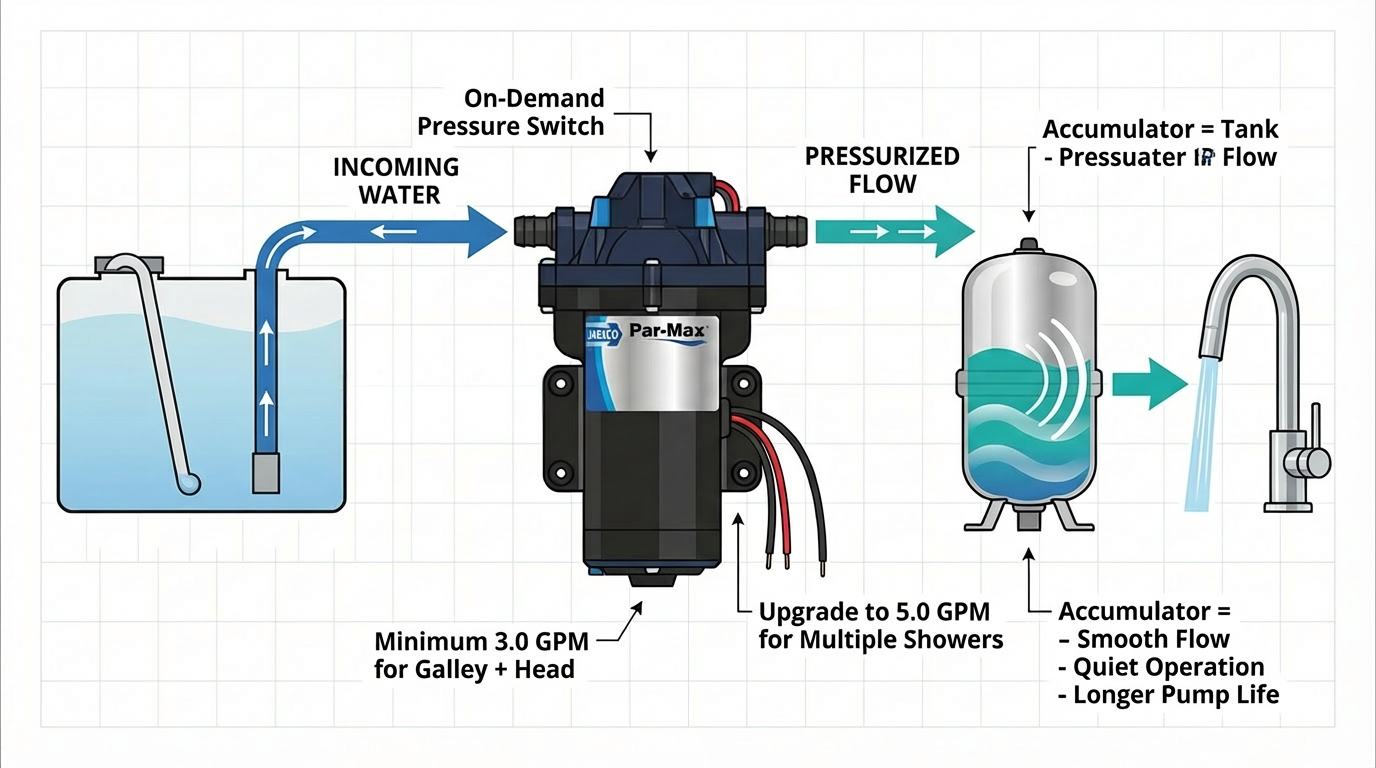
Jabsco Pumps are the heartbeat of the marine industry. Unlike house pumps, marine pressure pumps are "On-Demand"—they have a pressure switch that turns the pump on the second you open the tap.
- Sizing Tip: For a boat with a galley and a head, you need a minimum of 3.0 GPM (Gallons Per Minute). If you have multiple showers or a deck washdown, upgrade to a 5.0 GPM model.
- The Upgrade: If your pipes "hammer" when the pump turns off, install an Accumulator Tank. It smooths out the flow and extends the life of your pump.
2. Sanitation: The Throne Room
The number one maintenance complaint on any vessel is the Marine Toilet (or "Head").
Manual vs. Electric
- Manual (Twist 'n' Lock): Reliable and simple. However, they rely on the user knowing exactly how to pump the handle (wet bowl vs. dry bowl). If your crew struggles with this, clogs happen.
- Electric Marine Toilet: The ultimate upgrade. Units like the Jabsco Quiet Flush use a macerator pump to grind waste before sending it to the holding tank. It feels like a home toilet—push a button, and it flushes. No pumping required.
Maintenance Alert: If your manual pump handle keeps popping back up, your Joker Valve is worn out. This $15 part prevents backflow. Change it annually!
Browse Manual & Electric Marine Toilets
3. The Arteries: Fuel & Exhaust Hoses
While you are in the bilge, check your hoses. Using automotive hose on a boat is dangerous and illegal.
Marine Fuel Hose (USCG Type A1)
Ethanol in modern gasoline eats through older rubber lines. You must use USCG Type A1 Fuel Hose. It has a fire-resistant barrier layer designed to withstand 2.5 minutes of direct flame without leaking. If your hoses are over 10 years old, replace them now.
Wet Exhaust Hose
Your engine cools itself by dumping water into the exhaust. This mix of hot gas and water requires specialized Exhaust Hose. It is reinforced with wire (hardwall) to prevent it from collapsing under suction or heat. Never use standard white sanitation hose for exhaust—it will melt.

Shop Marine Exhaust & Fuel Hose
Summary: The Plumbing Checklist
Keep the fluids moving in the right direction.
- Pressure: Upgrade to a Jabsco Par-Max Pump.
- Comfort: Convert to an Electric Toilet.
- Safety: Inspect Fuel Hoses for cracking.