
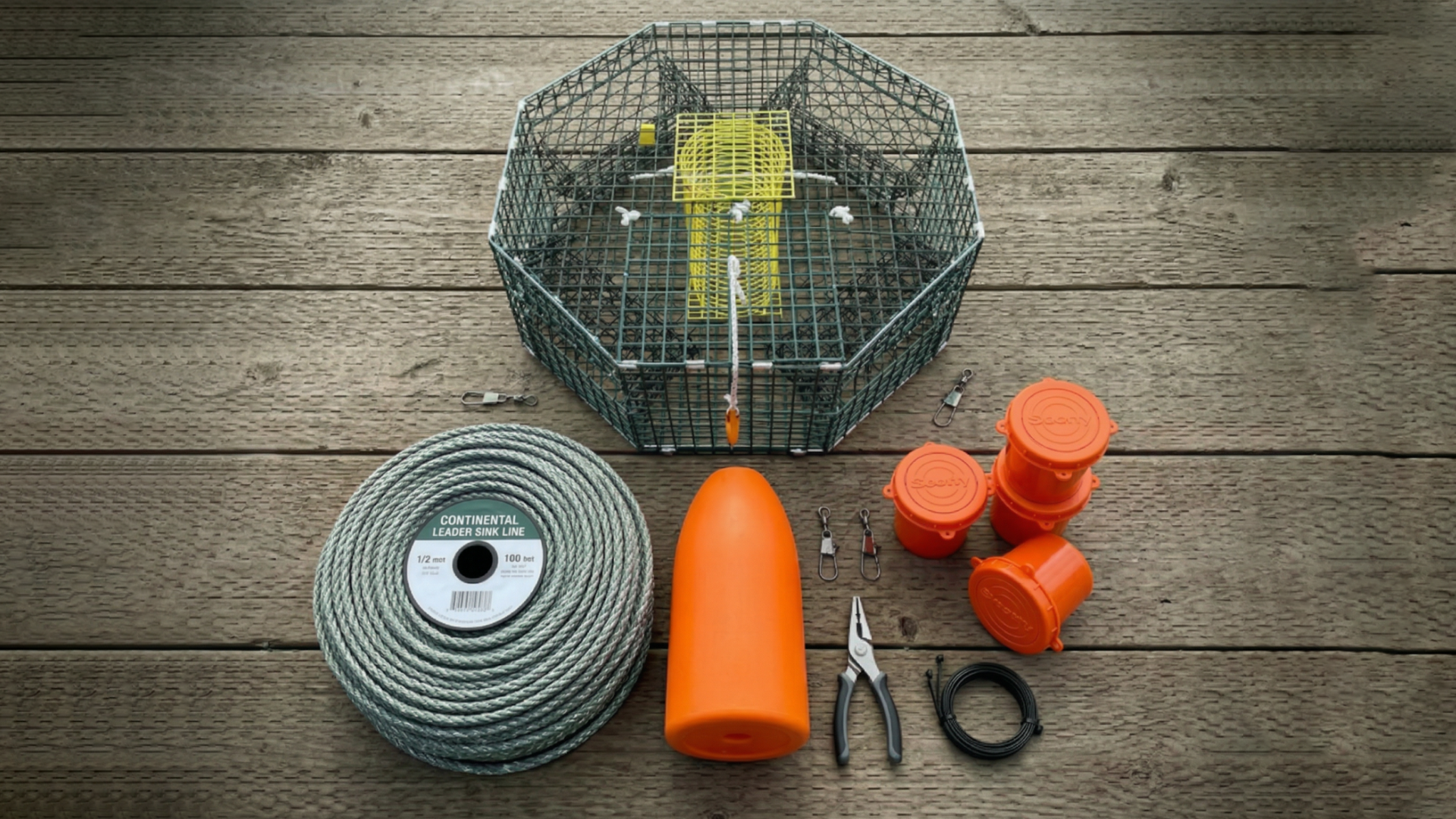
Whether you're getting ready for shrimp season or planning a weekend trip on the water, having the right shrimping gear can make the entire experience smoother and more productive.
Shrimping may seem simple: drop a pot, wait, and pull it back up, but each part of your setup plays an important role. Your shrimp pot needs to match the depth and water conditions where you’re fishing. Your line should be long enough and suited for saltwater use. Your buoy must stay visible and meet state regulations. And a reliable puller makes hauling your gear easier and safer.
This guide covers essential shrimping equipment, explains what each piece does, and helps you understand how everything works together as a complete, efficient setup.
What Is Recreational Shrimping?
Recreational shrimping is the process of catching shrimp using baited shrimp pots (also called shrimp traps) deployed from a boat. In most saltwater fisheries, weighted shrimp pots are lowered to the seafloor and connected to a surface buoy using leaded or sinking line to keep the gear properly positioned.

The type of shrimping gear you need depends on the following:
-
Water depth
-
Current strength
-
Bottom conditions
-
Local fishing regulations
-
The shrimp species in your area
Because shrimping often takes place in deeper water, your equipment must work as a complete system, from the shrimp pot on the bottom to the buoy on the surface.
Why Choosing the Right Shrimping Gear Matters
Many beginners assume shrimping is as simple as dropping a pot and waiting. In reality, each part of your shrimping setup plays a specific role.
-
A shrimp pot that is too light may drift in the current.
-
A shrimp line that is too short may prevent the pot from reaching the bottom properly.
-
A poorly sized buoy may submerge in a strong current.
-
Hauling deep-set gear without a pot puller can make retrieval slow and difficult.
When your shrimp trap, line length, buoy system, and pot puller are matched to your fishing depth and conditions, the process becomes more efficient and easier to manage.
This is why understanding how each piece of shrimping equipment works together is essential before heading out on the water.
Shrimp Pots: The Foundation of Your Setup
The shrimp pot, also called a shrimp trap, is the heart of any shrimping rig. Bait is placed inside the pot, which is lowered to the seafloor; shrimp enter through one-way tunnel openings and are unable to exit. Most pots are constructed from stainless steel wire mesh or heavy-duty synthetic fiber designed to withstand repeated saltwater submersion and years of use.
Pot Styles: Which Shape Is Right for You?

Square (Rigid) Shrimp Pots Square pots maximize interior volume, making them ideal for bait placement and catch capacity. Their flat sides stack cleanly on the deck for easy storage, an important feature on boats with limited space. The rigid frame holds shape under load and resists being dragged by tidal current. For most recreational shrimpers fishing in 100–300 feet of water, a medium to large square pot is the most practical and durable choice.

Octagonal Crab Pots: Octagonal pots offer improved stability on uneven seabeds. Their eight-sided shape reduces tipping in current and provides multiple entry points around the perimeter, which can increase crab access. The McKay Octagon Super Pot is a well-regarded example, built to the stringent standards required by Pacific Northwest fisheries and used by serious recreational crabbers throughout Washington and Oregon.

Collapsible / Kayak Pots Collapsible pots fold flat when not in use, ideal for smaller boats or kayaks where deck storage is at a premium.
Browse the full selection of shrimp and crab pots at Go2Marine.
Shrimp Pot Line: Leaded Line vs. Floating Line
Your line connects the pot on the bottom to the buoy at the surface, and the type of line you use significantly affects how well your setup performs.
Leaded Line (Sink Line)

Leaded line is a braided rope with lead embedded in the core, causing it to sink to the seafloor. This eliminates the hazard of a floating slack line that can be picked up by boat propellers, snagged by other anglers' gear, or looped under a pot being dropped nearby.
The rule of thumb with leaded line: use at least 25% more line than the depth you're fishing in. If you're dropping pots in 200 feet of water, rig at least 250 feet of leaded line. In areas with strong tidal currents (such as the Strait of Juan de Fuca or the San Juan Islands), using an even more current angle increases effective depth dramatically.
Floating (Poly) Line

Standard polypropylene floating line is less expensive but requires a lead weight clipped approximately 45 feet below the surface to sink the bulk of the line. Without a weight, the floating belly of the rope becomes a serious propeller hazard. Even with a weight, a strong current can pull the line up, creating tangles and snagging risks.
For beginners, a floating line works acceptably in calm, low-current bay environments. For serious shrimpers fishing in deeper water or tidal straits, leaded line is the clear choice.
Go2Marine stocks crab rope and shrimp lines in floating and leaded configurations, by the foot or by the fathom, from brands like Continental Western, Manho, and Samson.
Pot Pullers: The Difference Between Sore Arms and Smooth Hauls

Pulling a shrimp pot from 200+ feet of water by hand is backbreaking work, and every time you pause to rest, shrimp that have entered the pot can exit. A pot puller solves both problems: faster retrieval means fewer shrimp escape and far less physical wear on your crew.
Manual Pot Pullers
Hand-operated "crank"-style haulers provide a modest mechanical advantage and are appropriate for shallow water (under 100 feet) and lighter pots. They're compact, affordable, and require no power source, making them a solid entry-level option.
Electric Pot Pullers (12V)
Electric pot pullers are the most popular upgrade for recreational shrimpers. They run off your boat's 12V system, mount to a standard downrigger bracket (no special installation required for most models), and haul at a consistent 120–150 feet per minute. Most recreational-grade electric pullers handle loads up to 100–110 lbs, sufficient for 1 to 3 shrimp pots simultaneously.
The Ace Line Hauler Brutus Pot Puller is widely used among shrimpers in Discovery Bay and other Pacific Northwest fisheries and is available at Go2Marine. For 200+ foot depths and multi-pot strings, an electric puller becomes practical equipment; the time and physical savings are immediately noticeable.
Hydraulic Pot Pullers
For commercial operators or serious recreational shrimpers working beyond 300 feet, heavy-duty hydraulic pullers powered by Honda gasoline engines deliver the torque required for large pots and multi-pot strings. These systems operate through portable hydraulic power units, providing consistent hauling power for commercial-scale applications. Explore Go2Marine’s selection of Portable Hydraulic Power Units powered by Honda to see available configurations.
Shrimp Buoys and Floats: Mark Your Gear Clearly
A buoy does two things: it marks the location of your submerged gear so you can retrieve it, and it satisfies state regulatory requirements for gear identification. Most states require the buoy to display your full name and address (some require your boat registration number as well). Alaska, Washington, and Oregon regulations all specify yellow as the required buoy color for shrimp pots.
Go2Marine's buoy and float selection includes PVC floats in a range of sizes and colors, guaranteed to maintain buoyancy in saltwater conditions.
Final Word: Gear Up Before the Season Opens
Successful shrimping is not about a single piece of equipment. It’s about how every part of your setup works together.
Your shrimp pot must match the depth and current. Your line needs to be long enough and suited to the conditions. Your buoy setup should stay visible and meet regulations. And the right pot puller makes retrieval safer and more manageable, especially in deeper water.
When each component is selected with purpose, your gear performs as a complete system from the seafloor to the surface. That means fewer tangles, less strain during hauling, and a smoother experience on the water.
Before your next trip, take the time to review your setup. Check your line length. Inspect your buoys. Make sure your puller matches your depth. Small adjustments in preparation can make a noticeable difference once your pots are in the water.
With the right shrimping gear in place, you’re ready to focus on the experience itself, setting clean drops, hauling steadily, and making the most of your time on the water.
Go2Marine has been outfitting recreational and commercial shrimpers for generations, with a complete inventory of pots, pullers, line, buoys, and bait from brands including McKay, Beau Mac, SMI, Ace Line Hauler, and Scotty. Whether you're rigging your first shrimp pot or upgrading to a hydraulic davit system, the gear you need is here.