
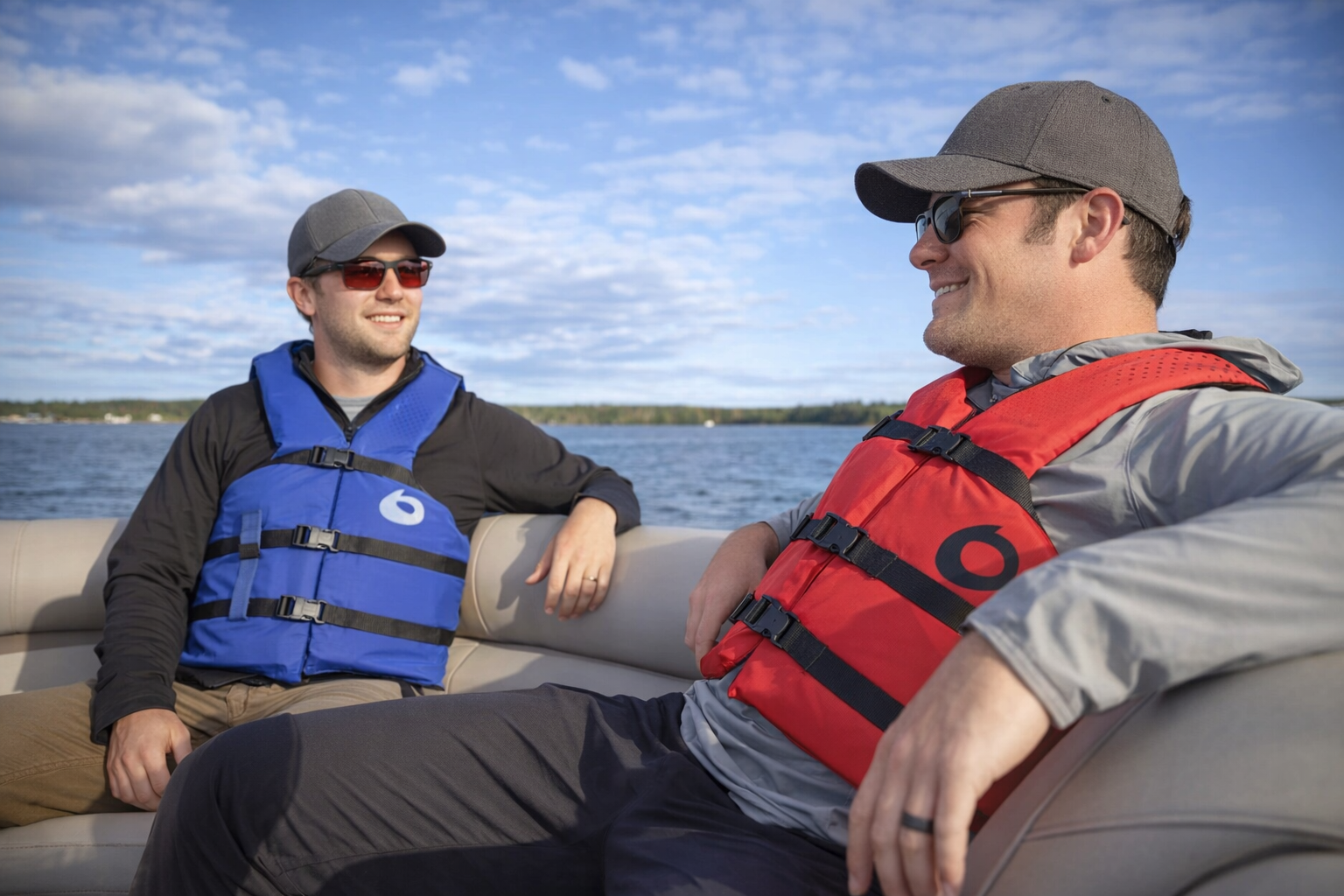
Every person on a recreational boat in the United States must have a USCG-approved life jacket or PFD on board. The right choice depends on where you boat, what activities you do, and who is wearing it. This guide covers every USCG classification, foam versus inflatable designs, proper sizing, legal carriage requirements, and maintenance.
What Is a PFD and Why Does Every Boater Need One?
A personal flotation device, commonly called a life jacket or life vest, is a wearable or throwable device designed to keep you afloat if you enter the water. The U.S. Coast Guard requires that every recreational vessel carry at least one USCG-approved personal flotation device for each person on board, and vessels over 16 feet must also carry a Type IV throwable device.
The terms "life jacket," "life vest," and "PFD" are used interchangeably by most boaters, though PFD is the official regulatory term. Regardless of what you call it, wearing one is the single most effective action you can take to survive a fall overboard. According to U.S. Coast Guard accident data, drowning is the leading cause of death in recreational boating, and the vast majority of drowning victims were not wearing a PFD at the time of the incident.
How Does the USCG Classify Life Jackets?
For decades, the USCG classified PFDs using a Type I through Type V system based on design specifications. As of January 6, 2025, the USCG introduced a new Performance Level system (Levels 50, 70, 100, and 150) that focuses on buoyancy performance rather than construction methods. Both labeling systems will appear on PFDs during the transition period, so understanding both is important for U.S. boaters buying new gear or evaluating PFDs already on board.
The new Performance Level numbers roughly correspond to the buoyancy in Newtons, though a range of buoyancies is allowed within each level. Existing PFDs with Type I through V labels remain fully legal and USCG-compliant. You do not need to replace gear that is in serviceable condition simply because it carries the older label. Here is how the old and new systems align.

Type I / Level 150: Offshore life jackets. Designed for open ocean, rough water, and extended survival where rescue may be delayed. Provides the highest buoyancy (22 lbs minimum for adults) and is designed to turn an unconscious person face-up in the water. Bulky but essential for offshore passages and commercial vessels.
Type II / Level 100: Near-shore buoyant vests. Intended for calm inland or near-shore waters where quick rescue is expected. Provides 15.5 lbs minimum buoyancy for adults and will turn some unconscious wearers face-up, though less reliably than Type I. More comfortable and affordable than offshore models.
Type III / Level 70: Flotation aids. The most popular type for recreational boating, fishing, and watersports. Provides a minimum of 15.5 lbs of buoyancy but is not designed to turn an unconscious wearer face-up. Comfortable enough for all-day wear, with a wide range of styles from fishing vests to paddling PFDs.
Type IV: Throwable devices. Ring buoys, horseshoe buoys, and buoyant cushions are designed to be thrown to a person overboard. Not worn. Required on boats over 16 feet and must be immediately accessible, not stowed in a locker.
Type V / Level 50: Special-use devices. Restricted to specific activities listed on the label, such as waterskiing, kayaking, or deck work. Must be worn (not just carried) to count toward USCG carriage requirements. Includes belt-pack inflatables, float coats, and deck suits.
How Do Foam and Inflatable Life Jackets Compare?
Foam PFDs use closed-cell foam panels sewn into the vest to provide permanent, inherent buoyancy. They require no maintenance, work immediately upon water entry, and are approved for all ages. Their downside is bulk, particularly in Type I and Type II designs, which can restrict arm movement and discourage boaters from wearing them on warm days.
Inflatable PFDs use a CO₂ cartridge to inflate a bladder when activated, either automatically upon water immersion or manually by pulling a cord. When not inflated, inflatable life vests are compact and lightweight, making them far more comfortable for all-day wear. This comfort factor is significant because the Coast Guard’s own research shows that boaters are far more likely to wear a PFD consistently if it does not restrict movement.
The tradeoff: inflatable PFDs require periodic inspection (checking the CO2 cartridge, indicator status, and bladder integrity); they must be rearmed after each deployment; and they are not approved for anyone under 16 years old. They are also not recommended for non-swimmers or for use in activities with a high likelihood of water entry, such as waterskiing or whitewater kayaking, where the impact of hitting the water could prevent manual activation.
How Should a Life Jacket Fit?
A PFD that does not fit properly can ride up over the wearer’s head, slip off in the water, or fail to provide adequate flotation. Fit is the single most overlooked factor in PFD selection, and it is especially critical for children.
Adults. Adult life jackets are sized by chest size measurement. Put the PFD on, zip and buckle all closures, and have someone pull up firmly on the shoulder straps. If the jacket rides above your chin or ears, it is too large. The fit should be snug but not restrictive. If you are between sizes, choose the smaller size. Most manufacturers list chest size ranges on the label in inches.
Children and infants. Federal law requires children under 13 to wear a USCG-approved life jacket on any moving vessel unless they are below deck or in an enclosed cabin. Children’s life jackets are sized by weight, not age. Never put a child in an adult PFD. Look for crotch straps (which prevent the jacket from riding up over the head), grab handles for rescue, and bright colors for visibility. Inflatable PFDs are not recommended for anyone under 16.
Test in water before you need it. The Go2Marine team recommends that every member of your crew test their life jacket in a pool or calm water before heading offshore. Enter the water wearing the PFD and confirm that your chin stays above the surface, your breathing is unobstructed, and the jacket does not shift or ride up. A few minutes of testing in controlled conditions builds confidence and reveals fit problems you cannot detect on dry land.
What Are the USCG Life Jacket Carriage Requirements?
Federal law establishes the minimum number and type of PFDs that must be carried on a recreational boat. State laws may add stricter requirements, so always check your local regulations.
All recreational vessels. One USCG-approved wearable PFD for every person on board. PFDs must be the correct size for the intended wearer, in serviceable condition (no rips, tears, broken buckles, or waterlogged foam), and readily accessible, meaning you can reach them quickly without tools.
Vessels over 16 feet. In addition to one wearable PFD per person, boats over 16 feet must carry at least one Type IV throwable device, such as a life ring or throwable float cushion. The throwable must be immediately available, not stowed in a compartment.
Inflatable PFDs. Inflatables count toward your carriage requirement only if they are USCG-approved, in serviceable condition, and sized for the intended wearer. Some Type V inflatables must be worn (not just carried) to satisfy the requirement. Always check the label for specific compliance instructions.
Children under 13. Federal law requires children under 13 to wear a USCG-approved PFD while on a moving vessel unless they are below deck or in an enclosed cabin. Some states set different age thresholds, so verify your state’s specific rule.
Which Life Jacket Is Right for Your Activity?
Different boating activities create different demands on your PFD. The Go2Marine team regularly helps customers match the right life jacket to the right activity, and these are the patterns we see most often.
Offshore fishing and cruising. Type I or a USCG approved inflatable with automatic hydrostatic inflation. Offshore conditions mean rescue may be hours away, and you need a device that keeps you face-up even if you lose consciousness. Brands like Mustang Survival build auto-hydrostatic inflatables specifically for this use.
Inshore and bay fishing. A fishing life jacket in Type III foam or a manual inflatable is the standard choice. Rescue is typically quick, so comfort and wearability matter more than maximum buoyancy. Choose a model with pockets, rod holder loops, and tool attachment points. Boat life jackets designed for fishing often feature mesh panels for ventilation during warm weather.
Kayaking and paddle sports. A high-back Type III or Level 50 kayak life vest designed specifically for paddling. Standard PFDs interfere with the seatback on a kayak. Paddling PFDs are cut shorter in the torso with larger arm openings for unrestricted paddle stroke movement.
Watersports. A Type III neoprene or foam vest rated for towing sports. Inflatable PFDs are not suitable for waterskiing, tubing, or wakeboarding because high-speed water entry can prevent activation and may damage the inflation mechanism.
Children and pets. Kids life jackets and youth life jackets must be foam, not inflatable. Children under 16 should never use inflatable PFDs. Every child’s vest is sized by weight and chest size, not age. For dogs, Go2Marine carries dog life jacket options with grab handles and bright colors for visibility. Dog PFDs are not USCG certified but provide essential buoyancy for pets that tire or panic in open water.
How Do You Inspect and Maintain a PFD?
A PFD only works if it is in a serviceable condition. Annual inspection takes minutes and can save a life.
Foam PFDs. Check all zippers, buckles, and straps for function. Inspect foam panels by squeezing them firmly. Waterlogged or crumbling foam has lost buoyancy, and the jacket must be replaced. Check stitching and fabric for tears, UV degradation, or mildew. Rinse with fresh water after saltwater use and dry completely before storing. Store in a cool, dry, ventilated location. Never leave PFDs compressed under heavy gear. Go2Marine carries PFD storage bags and racks designed to keep your gear accessible and in good condition.
Inflatable PFDs. Check the status indicator on the inflation mechanism. A green indicator means the CO₂ cartridge is properly installed and the unit is armed. Check the cartridge for corrosion or puncture. Inspect the inflation bladder by orally inflating the PFD and leaving it overnight. If it loses pressure, the bladder has a leak and the unit needs service or replacement. Replace the CO2 cartridge after any deployment and after the manufacturer’s recommended service interval.
Finding the Right Life Jacket for Your Crew
Every person on your boat needs a properly fitting, USCG-approved PFD matched to the activity and water conditions. Browse the full selection of life jackets, life vests, and PFDs to find the right fit for adults, children, infants, and pets, or call the Go2Marine team at 800-998-9508 for personal sizing and selection help. We have been outfitting boaters with safety gear since 1967.