
Introduction
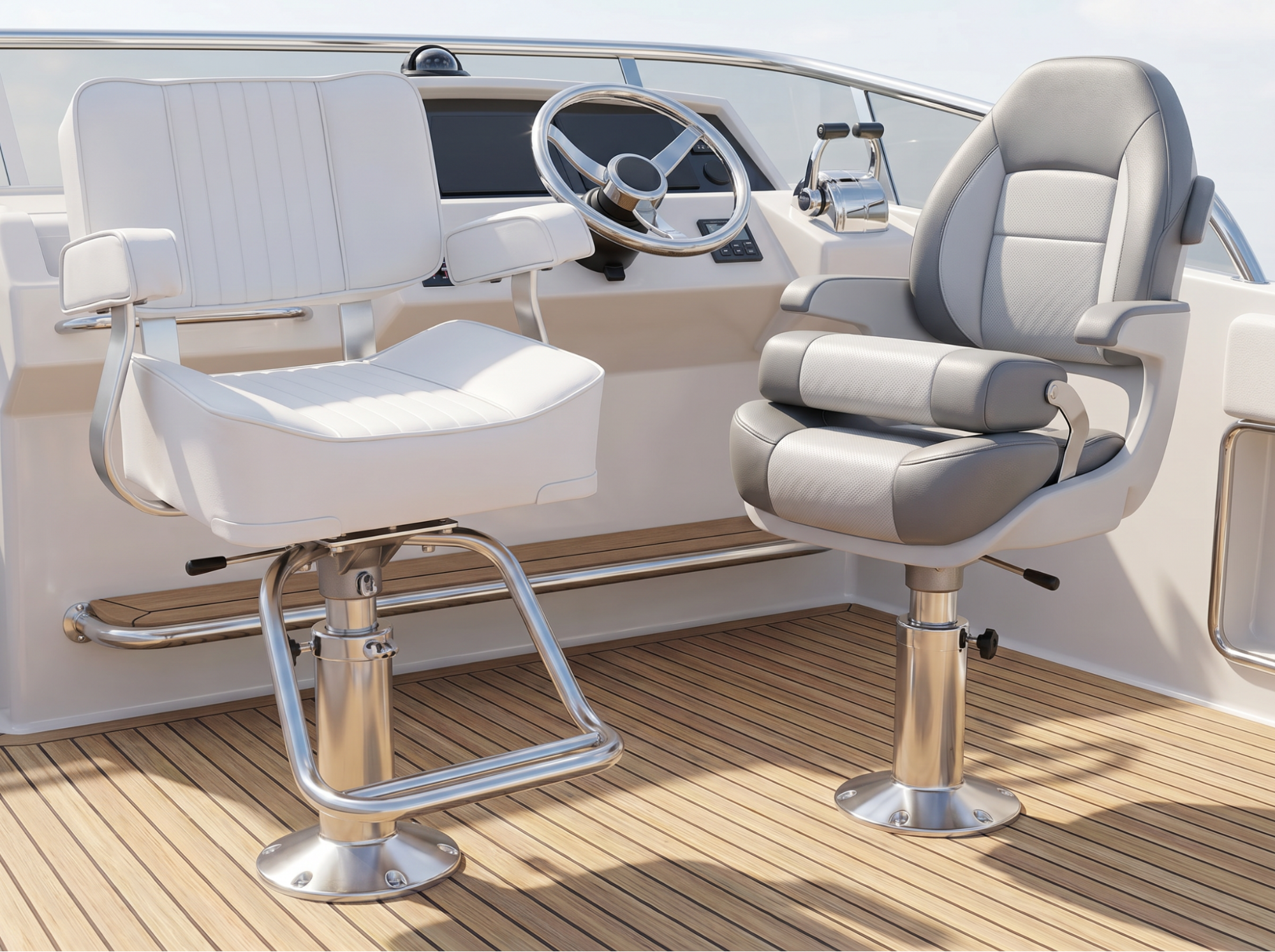
If you have shopped for boat captain chairs and helm seats, you have probably noticed the two terms used for what looks like the same thing, and that is exactly the case. The seat at your wheel carries several names, and the differences that actually matter are style, material, and mounting, not the label on the listing. Whether you are restoring an older boat, repowering and upgrading the helm, or simply replacing a sun-baked seat, the goal is comfort and control: a seat that supports you for long days, holds up to UV and spray, and bolts down securely. This guide settles the terminology, walks through the seat styles and helm seat options, and explains pedestals, swivels, and sliders so you can match the right seat to your boat.
Are Boat Captain Chairs and Helm Seats the Same Thing?

Yes. A boat captain chair, a captain seat, a helm chair, and a helm seat all describe the same thing: the seat positioned at the boat’s helm where the operator sits or stands to drive. The names are regional and habitual rather than technical, which is why one store lists “captain chairs” and another lists “helm seats” for nearly identical products. What separates one seat from the next is not the name but the build: the back height, whether it has a flip-up bolster, the frame and cushion material, and the base it sits on. Once you stop chasing the term and start comparing those features, the choice gets much simpler. You will find both terms used across the boat seats range, so search by the style and size you need rather than by wording.
What Seat Styles Should You Consider?

Boat helm seats come in five common styles, and each suits a different kind of boating. A bucket helm seat is the familiar contoured single seat, available in high-back and low-back versions, and it is the all-around choice for most helms and consoles.
A bolster seat adds a flip-up front cushion so you can drop it down to sit or raise it to lean and stand, which helps when you are running in chop or watching the water. A leaning post is a padded standing rest mounted behind the helm, often with rod holders and storage built in, and it is popular on center console fishing boats. Back-to-back and folding seats convert between a seat and a lounge or fold flat to save space on runabouts and bowriders, and folding-backrest seats are a simple, space-saving option. Finally, a suspension seat rides on a shock-absorbing base for offshore and commercial use. Recreational helm seats from makers such as Tempress, Wise, and Springfield (for example the Springfield Deluxe Captain’s Chair) cover the bucket and folding categories well.
Why Does Seat Material Matter?
Seat material matters because a helm seat lives in sun, salt, and rain, and cheap upholstery fails fast. Look for marine-grade vinyl, which is built to resist UV fading, mildew, and water far better than automotive or furniture vinyl, over a closed-cell foam that does not soak up water and stay wet. The frame underneath should be corrosion resistant, typically powder-coated steel, aluminum, or stainless hardware, since a rusted frame ruins an otherwise good seat.
Comfort over a long day is partly about the cushion and partly about support. Some seats add orthopedic or posture-focused designs, such as the Tempress ProBax captain’s seat, that aim to keep your hips and lower back supported on long runs. When a seat finally wears, a fitted boat seat cover protects the replacement and extends its life through the off-season.
How Do You Choose the Right Pedestal and Mount?
The pedestal and mount decide how the seat sits, turns, and slides, and they matter as much as the seat itself. “Boat seat pedestal types” is one of the most common seating searches, so here is a plain decoder of the main options and what each one does.
|
Pedestal / mount |
What it does |
Good for |
|---|---|---|
|
Fixed-height pedestal |
Holds the seat at one set height |
Simple, sturdy helm setups |
|
Adjustable pedestal |
Raises and lowers the seat height |
Sharing a helm among different heights |
|
Power-rise / sit-stand |
Lets you sit or stand at the wheel |
Running standing in chop, visibility |
|
Swivel mount |
Rotates the seat to face the cockpit |
Access, sociability, fishing |
|
Seat slide |
Moves the seat fore and aft |
Reaching the wheel and throttle comfortably |
|
Suspension base |
Absorbs impact from waves |
Offshore and rough-water running |
You can browse complete pedestals, columns, and mounts or shop by system, such as Attwood Swivl-Eze pedestal kits and the Springfield adjustable pedestal. For swivel and fore-and-aft motion, hardware from Garelick, including a low-profile seat slide and a locking seat swivel, lets you tune the seating position.
What Pedestal Height and Diameter Do You Need?
The right pedestal size is the one that matches your boat’s existing base and seat hole pattern, so start by measuring what is already there. Two post diameters are common on recreational boats, a larger and a smaller standard, and a seat base, swivel, or slide is built to fit a specific post and bolt pattern. If you are replacing a worn pedestal, measure the post diameter, the base footprint, and the bolt spacing, then match a replacement to those numbers rather than guessing. For height, a seated helm wants your feet flat and your eyeline clear over the windshield or console, while a sit-stand or power-rise pedestal lets one helm work for both seated and standing operation. When in doubt, confirm the post size and bolt pattern on the product page and against your current hardware before ordering.
Do You Need a Swivel and a Seat Slider?
A swivel and a slider solve two different problems. A swivel lets the seat rotate so you can face the cockpit, talk with passengers, or turn to fish, then lock forward for running. A seat slider moves the seat fore and aft so you can reach the wheel, throttle, and footrest comfortably, which matters because helms are rarely built for every body. Many helm setups use both, a swivel under the seat and a slide between the swivel and pedestal, and adding them later is straightforward with standard seat hardware.
If you are piecing together a setup, the seat hardware and accessories range covers swivels, slides, and mounts, and the practical guidance in this guide to Attwood, Sea-Dog, and Seachoice hardware is a useful companion for choosing fittings.
Which Seat Is Best for a Center Console?

For a center console, the most useful helm seat is usually a bolster seat or a leaning post, because both let you run standing with good visibility and then sit when the water lays down. A flip-up bolster gives you a seat and a lean in one footprint at the console, while a leaning post, such as the Neptune standard leaning post, adds a sturdy standing rest plus rod holders and storage behind the helm. Anglers who spend long days on their feet often favor the leaning post, while families who want a comfortable seat between runs lean toward a high-back bucket seat with a flip-up bolster.
Which Features Matter for Offshore and Long Days?
For offshore running and long hours, the features that matter most are impact absorption and back support, which is why suspension helm seats exist. A suspension seat rides on a shock-absorbing torsion or air base that takes the sting out of pounding seas, reducing fatigue and strain on your back over a long day. Heavy-duty options such as HO Bostrom commercial-grade seats, including the Seapost Sierra pilot seat, and the Sierra Torsion 380 mechanical-suspension helm seat are built for commercial crews, pilots, and offshore captains who need durability and ride comfort. The full commercial-grade seats range is the place to start if your hours and water demand it.
How Do You Mount a Helm Seat Securely?
A helm seat is only as safe as the deck it is bolted to, so mount it into solid, reinforced structure rather than thin fiberglass or plywood alone. Use a backing plate or reinforcement plate under the deck to spread the load, line the bolts up with the seat or pedestal pattern, bed the hardware in a marine sealant to keep water out of the core, and use corrosion-resistant fasteners. A purpose-made backing plate such as the Tempress helm seat reinforcement mounting plate makes this easier on many installs. If your deck is soft or the core is questionable, repair it before mounting, because a seat that tears loose underway is a real hazard. When the job calls for more parts, you can buy boat seats online and have boat parts delivered fast rather than waiting on a special order.
How Do You Choose the Right Boat Captain Chair or Helm Seat?
Work from your boat and your boating, then the seat follows.

Runabouts and bowriders. A back-to-back or folding seat saves space and converts to a lounge, keeping the cockpit flexible.
Center consoles and bay boats. A bolster seat or leaning post lets you run standing and sit when you can, with rod storage close at hand.
Cruisers and runaround helms. A high-back bucket captain chair on an adjustable pedestal with a swivel and slide gives comfort and an easy reach to the controls.
Offshore and commercial. A suspension or orthopedic seat protects your back over long, rough days.
Boaters who normally shop stores like West Marine will find the same makers here, so Go2Marine works as a straightforward alternative to West Marine for boat seating and hardware. If you have been comparing West Marine boat seats, you can match a style and pedestal here, find your replacement boat part, and compare marine supplies online instead of settling for whatever is in stock locally. Worn swivels, slides, and cushions are the West Marine replacement parts boaters reorder most, and they ship direct.
Choosing Your Helm Seat: The Short Version
A boat captain chair and a helm seat are the same seat, so stop weighing the name and weigh the build instead. Pick a style that fits how you boat, a bucket seat for all-around comfort, a bolster or leaning post for standing and fishing, a back-to-back for flexible cockpits, or a suspension seat for offshore hours. Choose marine-grade vinyl over a corrosion-resistant frame so it survives sun and salt. Then match the mount: the right pedestal height and diameter, a swivel for access, and a slide for reach, all bolted into solid, reinforced deck. Get those three right and the seat at your helm will be comfortable, secure, and built to last.
Shop the full helm seat and boat captain chair selection at Go2Marine →