
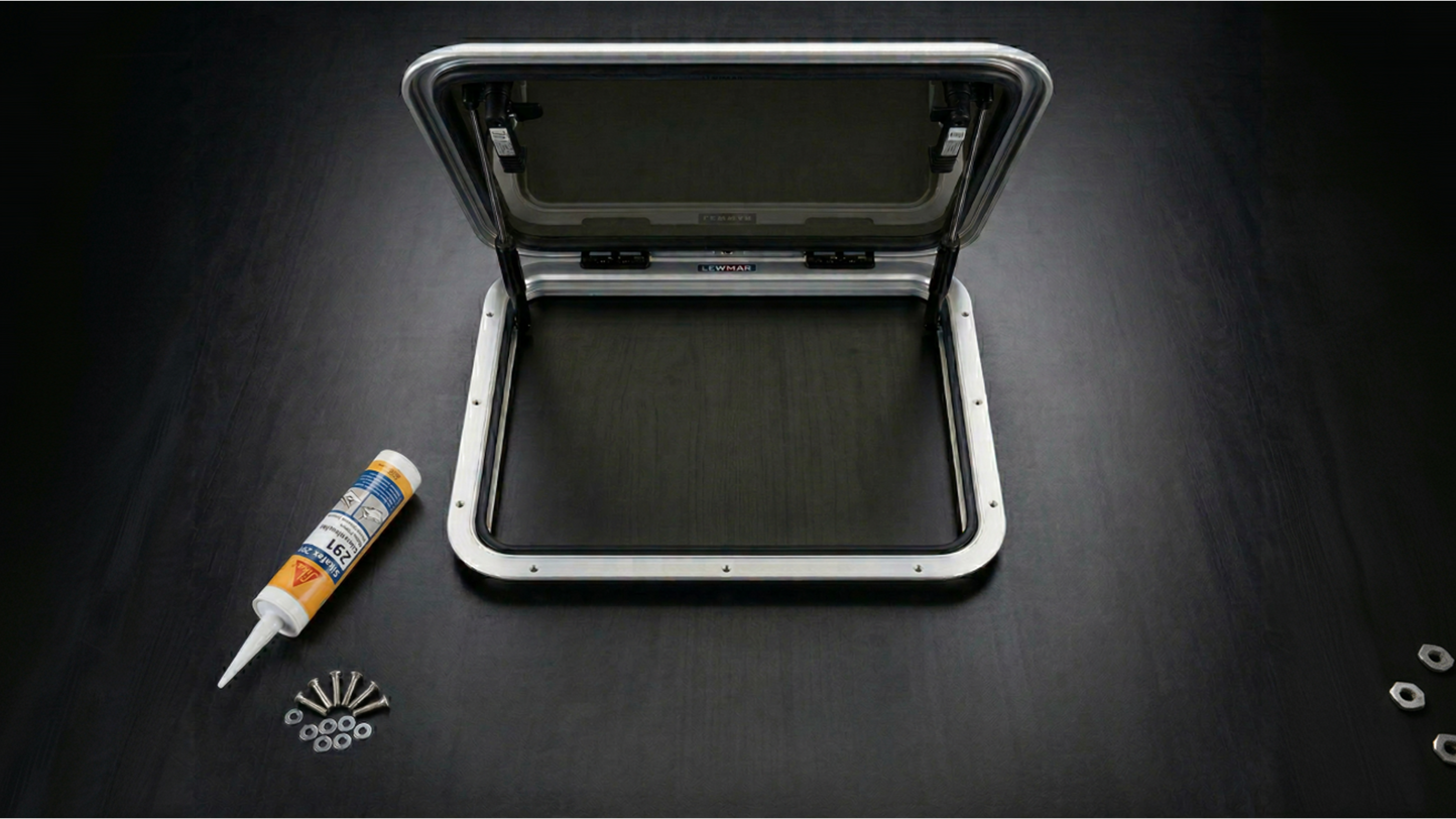
Many boats rely on deck hatches to provide access to storage compartments, bilge areas, and cabin spaces, but not every hatch is designed for every vessel. Choosing the wrong boat hatch can lead to leaks below deck, water-damaged equipment, mold in storage compartments, or structural issues over time.
The right boat hatch depends on several factors: your boat type, where the hatch is installed, the water environment you operate in, and the level of water resistance required.
Whether you run a center console fishing boat in the Gulf Coast, a cruising sailboat in the Pacific Northwest, or a pontoon on a freshwater lake, selecting the correct marine hatch ensures durability, safety, and proper deck protection.
In this guide, we'll explain the different types of boat hatches, materials, sizing methods, installation considerations, and marine standards so you can confidently choose the right hatch for your vessel.
What Is a Boat Hatch and Why Does It Matter?

A boat hatch is an opening in the deck or hull of a vessel, covered by a panel that can be opened and closed. Most marine hatches consist of four key components: the hatch door, the frame, the hinges, and the latch.
Hatches serve several important jobs on a boat: they provide access to storage compartments and bilge spaces, allow ventilation below deck, let in natural light to cabins, and most importantly, keep water out when closed.
A hatch that doesn't seal properly, isn't sized right, or isn't built for your type of water can mean the difference between a dry, functional boat and an expensive repair bill. That's why choosing the right boat hatch cover is a serious consideration.
Types of Boat Hatches: Which One Do You Need?
Boat hatches are typically categorized based on how well they seal against water and their intended use on the vessel. The three main categories are watertight hatches, weathertight hatches, and access or inspection hatches. Each type is designed for different marine environments and deck locations.
|
Type |
Sealing Level |
Best Use Case |
Typical Water Environment |
|
Watertight |
Highest resistance to submersion pressure |
Engine rooms, offshore vessels, and below-waterline compartments |
Offshore / ocean |
|
Weathertight |
High, resists rain, spray, and waves |
Cabin tops, deck hatches, cockpit access |
Coastal / nearshore |
|
Access / Inspection |
Basic, resists light splash |
Storage, bilge inspection, freshwater boats |
Inland / protected waters |
Flush and Low-Profile Deck Hatches

Flush-mount and low-profile hatches sit nearly level with the deck surface, minimizing trip hazards and keeping a clean, streamlined look. These are ideal for center consoles, walkarounds, and sportfishing boats where foot traffic across the deck is constant.
Browse low-profile deck hatches at Go2Marine
Raised Coaming Hatches

Raised coaming hatches have an elevated frame that lifts the hatch opening above the deck level. This prevents water from pooling around the hatch and keeps wave wash from forcing water through the seal. They're the go-to choice for offshore fishing vessels, bluewater sailboats, and commercial workboats.
Boat Hatch Materials: Why Aluminum Is the Standard for Marine Deck Hatches
The material used in a boat hatch plays a major role in how well it handles saltwater exposure, UV radiation, deck traffic, and long-term corrosion.
While marine hatches can be manufactured from several materials, aluminum is widely considered the industry standard for structural marine deck hatches, particularly on offshore boats, cruising sailboats, and commercial vessels. Smaller access and inspection hatches, however, are often made from UV-stabilized resin or marine plastics and are typically used for lighter-duty access points such as storage compartments, battery compartments, or bilge inspections.
Aluminum hatches provide a strong balance of structural durability, corrosion resistance, and long service life, making them a common choice for boats operating in both coastal and offshore environments.
Understanding how aluminum hatches are constructed can help you choose the right model for your vessel and operating conditions.
Cast vs. Extruded Aluminum Boat Hatches
Aluminum is widely considered the most durable material for marine deck hatches, especially on offshore boats, sailboats, and commercial vessels.
There are two main construction methods used in aluminum boat hatches:
Cast Aluminum Hatches

Cast aluminum hatches are produced by pouring molten aluminum into a mold. This process creates a thicker, denser structure that offers excellent strength and rigidity. Because of their durability and resistance to heavy loads, cast aluminum hatches are commonly used on offshore vessels, bluewater sailboats, and commercial workboats where deck hardware must withstand extreme conditions.
Extruded Aluminum Hatches

Extruded aluminum is formed by forcing aluminum through a shaped die to create lightweight structural profiles. These hatches are typically lighter and more economical than cast models while still offering solid corrosion resistance. They are commonly used on coastal cruising boats, recreational powerboats, and nearshore vessels where structural loads are lower.
How to Choose a Marine Hatch Based on Your Vessel Type

Different boats place different demands on deck hardware. A hatch that works well on a small freshwater pontoon may not provide the durability or sealing performance required for offshore conditions.
Choosing the right boat hatch or marine deck hatch starts with understanding how your vessel is used, the water environment you operate in, and the type of access or ventilation you need below deck.
Below is a practical breakdown of hatch recommendations based on common boat types.
Offshore and Bluewater Sailing Vessels
Offshore sailing vessels operate in some of the most demanding marine environments, where deck hardware must withstand heavy seas, strong winds, and constant saltwater exposure.
For these conditions, many boat builders and marine professionals recommend cast aluminum watertight hatches with raised coamings and multiple locking dogs. These features help maintain a tight seal and prevent water intrusion during rough offshore passages.
High-end marine hatch lines such as Bomar cast hatches are widely used on bluewater cruising boats because they are designed specifically for offshore durability and watertight performance.
Center Console and Coastal Powerboats
Center console fishing boats and coastal powerboats often prioritize deck safety, quick access, and low-profile hardware.
Flush-mount or low-profile aluminum deck access hatches are commonly used on these boats because they sit nearly level with the deck surface, reducing trip hazards while anglers move around the cockpit.
Many of these hatches include slam latches or quick-release latches, allowing boaters to open or secure the hatch quickly when accessing storage compartments, fish boxes, or bilge areas.
Pontoon Boats and Freshwater / Inland Vessels
Boats that operate primarily on lakes, rivers, and protected inland waters typically face less exposure to heavy waves and extreme saltwater corrosion.
For these vessels, boat owners often prioritize ease of installation, reliable sealing, and corrosion resistance rather than heavy-duty offshore construction.
Aluminum deck hatches designed for recreational boats usually provide more than enough durability for storage access, deck compartments, and maintenance access points on freshwater vessels.
Cruising Sailboats
Cruising sailboats place unique demands on deck hatches because they must balance watertight integrity, ventilation, and natural light below deck.
Many cruising boats use aluminum-framed hatches with clear acrylic or polycarbonate lenses, allowing sunlight to enter the cabin while maintaining weather resistance.
Shop Boat Hatches at Go2Marine
Marine Safety Standards for Boat Hatches
Boat hatches are designed to do more than provide access to storage or cabin spaces; they must also help maintain the vessel’s watertight integrity and onboard safety. For this reason, many marine hatch manufacturers design their products according to recognized marine safety and construction standards.
Organizations such as the American Boat & Yacht Council (ABYC) and other marine engineering bodies publish guidelines that cover areas like deck openings, hatch strength, sealing performance, and safe installation practices. These standards help ensure that marine hardware can withstand real-world conditions such as heavy weather, deck loads, and constant exposure to water.
On boats with enclosed cabins, hatch design may also consider emergency escape access, ensuring that occupants can exit the cabin safely if needed.
When choosing a replacement hatch, it’s generally a good idea to select products from reputable marine manufacturers that follow recognized marine engineering and safety standards. This helps ensure proper durability, sealing performance, and long-term reliability.
Choosing the Right Boat Hatch for Long-Term Performance
The right boat hatch does more than provide access to storage or cabin spaces; it helps protect your vessel from water intrusion, improves ventilation below deck, and ensures reliable performance in demanding marine environments.
When selecting a marine hatch, consider the type of vessel you operate, the conditions you boat in, and the specific function of the hatch. Offshore boats often require heavy-duty watertight hatches, while recreational vessels may prioritize low-profile deck access and easy installation. Matching the hatch design to your boat’s layout and usage is the best way to ensure long-term durability and a secure seal.
It’s also important to verify cutout dimensions, corner radius, and mounting hardware before purchasing a replacement hatch. Choosing a well-built hatch from a reputable marine manufacturer can make installation easier and help prevent leaks, corrosion, and structural issues down the line.
Whether you're upgrading an aging hatch or installing one on a new project, investing in the right marine deck hatch will help keep your boat dry, functional, and ready for years of use on the water.
Ready to find the right hatch for your Boat?
Explore a full selection of boat hatches and hatch covers from trusted marine brands designed for durability, watertight performance, and reliable deck access.