
Why does my boat's head smell even after cleaning?
The odor may not be coming from the tank itself. Older sanitation hose can become permeated over time, allowing sewage gases to pass through the hose wall. Upgrading to a premium sanitation hose with odor-barrier technology can often eliminate persistent odors.
Recommended Products:
- Shields 101 Series Black Sanitation Hose
- Trident 102 Series Sani-Shield Sanitation Hose
- Shields 105 Series Poly X Sanitation Hose
What is the best sanitation hose for odor control?
Premium sanitation hoses designed with odor-resistant barriers provide the best protection against permeation. Poly X and Sani-Shield style hoses are commonly chosen for long-term odor prevention.
Recommended Products:
What is a double helix sanitation hose?
Double helix hose contains dual reinforcement wires that improve kink resistance and vacuum performance. This allows tighter bends without collapsing, making it ideal for crowded marine plumbing installations.
Recommended Products:
Why would I choose a VAC XHD hose?
VAC XHD hoses are designed for vacuum flush marine and R/V toilet systems. VAC XHD hoses will not collapse from the suction created by vacuum flush systems. They work well for sanitation systems, livewell systems, and plumbing runs requiring tight bends.
What is the best marine fuel hose for ethanol-blended gasoline?
Modern ethanol fuels require low-permeation fuel hose designed to resist chemical degradation and reduce vapor emissions.
Recommended Products:
- Trident 365 Series Type A1-15 Barrier Lined Marine Fuel Hose
- Shields 368 Series Low Permeation Marine Fuel Hose
What is the difference between A1-15 and B1-15 fuel hose?
Type A1 hose provides the highest fire resistance and is required for any enclosed compartments like engine rooms or below deck fuel tanks. B1 hose is less flame resistant and is only for use in above deck open air areas. (The-15 is the permeability rating. Designates no more than 15g of gas permeating fr hose over 24 hrs. No diff in that between A1-15 and B1-15)
Recommended Products:
What fuel hose should I use for fuel tank fills?
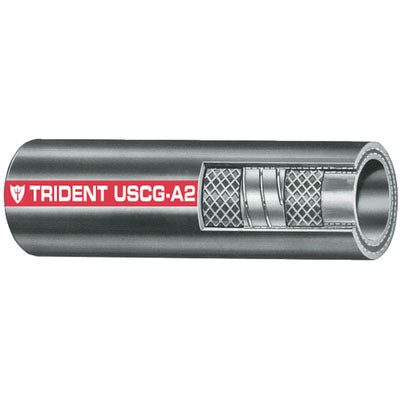
Fuel fill hose is specifically designed to carry fuel from the deck fill fitting to the fuel tank while resisting fuel, alcohol blends, and vapor permeation. A2 fuel hose is designed for applications where fuel is not flowing continuously and is best suited for fills.
Recommended Products:
What is the best wet exhaust hose for diesel engines?
Wet exhaust hose is engineered to handle hot exhaust gases mixed with cooling water. Reinforced hose helps prevent collapse and withstands engine vibration. Wire supported or “Corrugated” hose like the Shields 254 or Trident 252 will allow tighter bends in a shorter radius where 90 deg turns are required. Internal support hose like the Shields or Trident 250 series offer good support with easier handling and cutting. Blue Silicone Trident or Shields 202V or 252V are required for high temp exhaust (over 250 deg).
Recommended Products:
Why would I choose corrugated exhaust hose?
Corrugated wet exhaust hose offers additional flexibility in installations where routing space is limited.
Recommended Products:
What hose is best for tight engine room installations?
When clearance is limited, choose hoses specifically designed for tight bend radiuses and high flexibility.
Recommended Products:
- Trident 250/100 Flex Wet Exhaust Hose
- Shields 250 Series ShieldsFlex II Exhaust Hose
- Shields 254 Hose
Why does my bilge pump run but discharge very little water?
A collapsed, kinked, or undersized bilge hose can reduce pump efficiency and increase discharge time.
Recommended Products:
What hose should I use for a livewell system?
Livewell hose should be flexible, kink resistant, and capable of handling continuous water circulation.
Recommended Products: