Is my boat’s gas system required to be inspected or certified?
In the United States, privately owned recreational boats are not required by federal law to have routine gas system inspections or certification. Fuel and propane systems are regulated at the manufacturer level by the U.S. Coast Guard and industry standards such as ABYC. However, gas system inspections may be required by marine insurers, marinas, surveyors, or for liveaboard and commercial use.
Can I work on my own boat’s gas system?
In the United States, owners of privately owned recreational boats are generally allowed to work on their own propane or fuel systems. There is no federal requirement that gas work be carried out by a licensed or registered professional, nor is there a mandatory gas safety certificate for private boats. However, all gas systems should be installed and maintained in a safe and seaworthy manner. Marine surveyors, insurers, and some marinas may require gas systems to meet recognized industry standards, such as those published by the American Boat & Yacht Council (ABYC). Work that does not meet these standards may affect insurance coverage, marina agreements, or the ability to pass a marine survey.
Why are older or DIY gas systems considered higher risk?
Gas systems that have not been inspected for many years, or that were modified by unskilled installers, may rely on poor workmanship carried out long ago. These systems can present safety risks even if they appear to function normally.
What materials should never be used in a marine gas system?
All components in a marine gas system must be LPG-approved and marine-grade. Unsafe materials include incorrect pipework, corroded pipes in wet bilges, low-pressure hoses used on high-pressure systems, water or natural gas fittings, hydraulic fittings, car radiator hose, and plastic push-fit pipe used as gas line.
What are common signs of an unsafe or DIY installation?
Warning signs include the absence of a gas test point, use of unsuitable worm-drive clips, copper pipework without adequate clipping, and the use of parallel thread or soft-soldered fittings. These indicators suggest the system may not meet proper safety standards.
How old can gas hoses be before they need replacing?
Gas hoses are printed or stamped with a manufacture date and should be less than five years old. Many boats still have hoses installed decades ago, which can pose a safety risk.
Why are camping-style gas regulators unsuitable for boats?
Camping-style regulators, commonly blue for butane and red for propane, are not designed for marine conditions. They are made from non-marine-grade materials and lack a safety pressure-relief valve. As they corrode, they may fail to regulate gas pressure correctly.
What are the requirements for a proper gas cylinder locker?
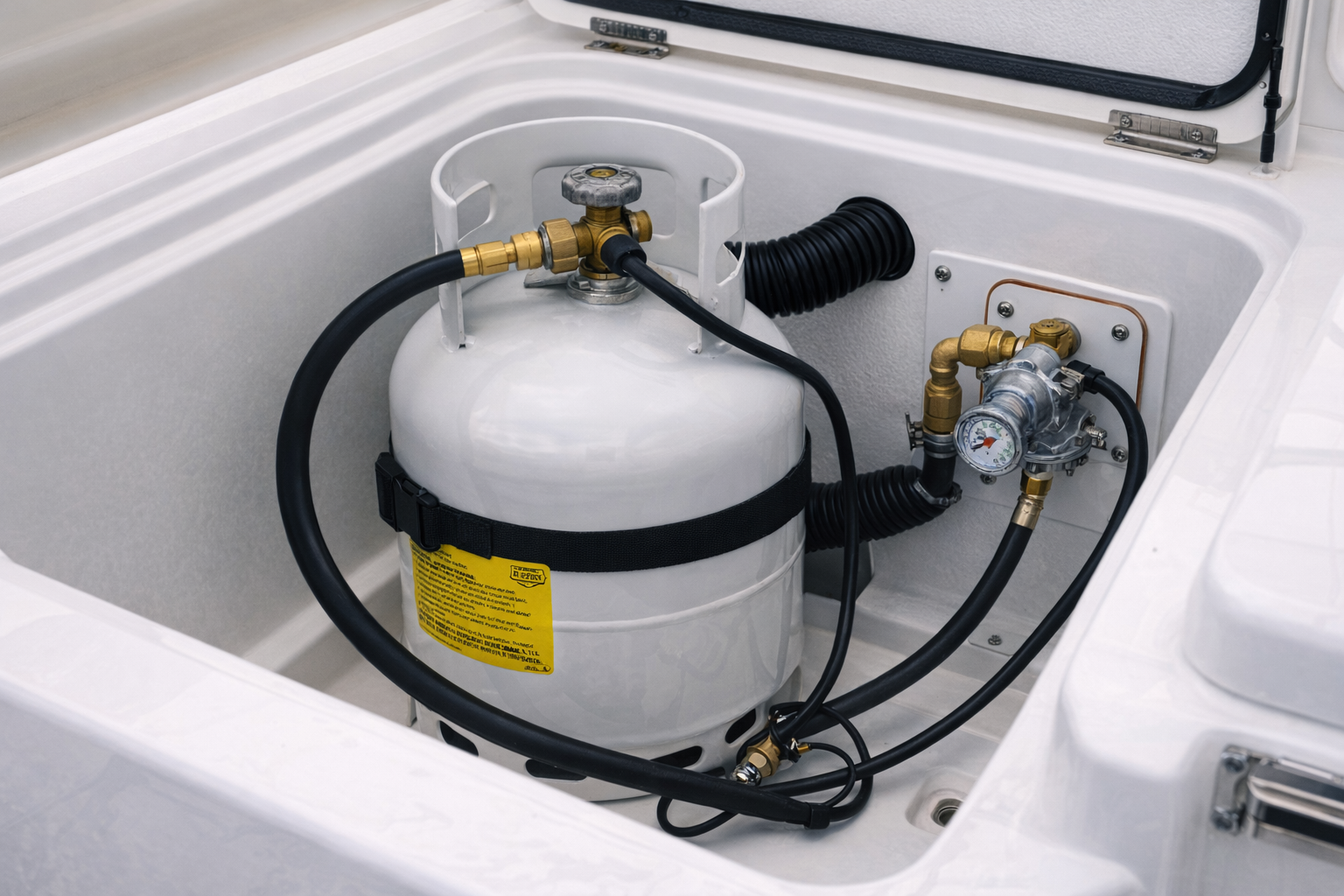
A proper gas locker must be gas-tight, drain directly overboard, securely restrain cylinders, and be large enough to hold both the active cylinder and any spare. Spare cylinders should never be stored in accommodation spaces.
What components make up a typical marine gas system?
A typical system includes a gas-tight locker with overboard drainage, a marine-grade regulator, LPG-grade copper pipework secured throughout the vessel, shut-off valves near appliances, an armoured hose for moving appliances, and a test point at the appliance.
What basic practices help ensure safe gas use onboard?
Safe practices include turning gas on only when needed and off after use, ensuring adequate ventilation, never using a cooker for space heating, never leaving older cookers unattended, keeping burners clean, and installing gas alarms that are tested regularly.