
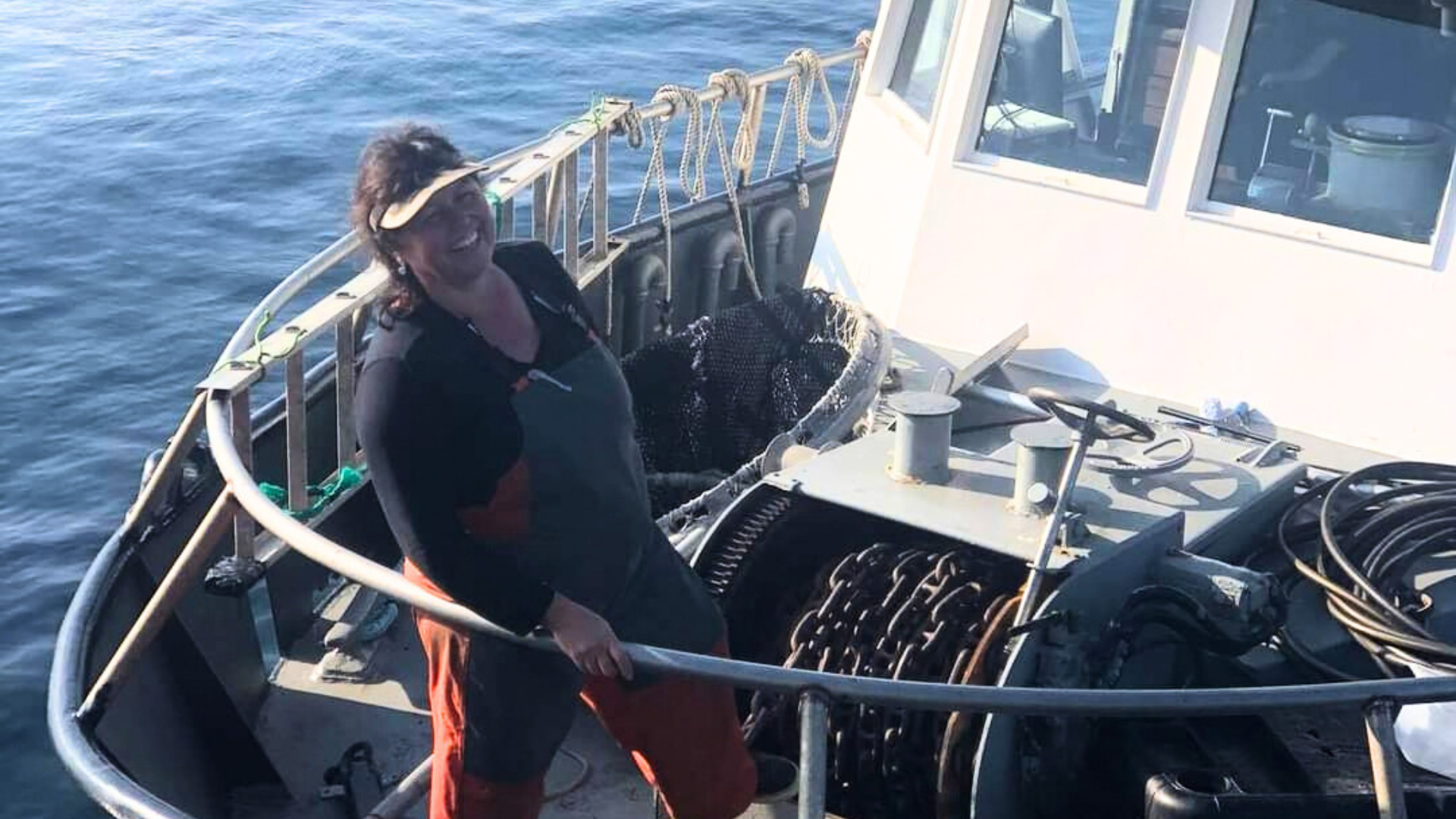
The long history of the commercial fishing industry is as much about celebrating the past as it is about fighting to make sure there’s a future. For Tah-Mahs Ellie Kinley, a member of the Lummi Nation and a lifelong fisher, that fight is personal. We sat down with Ellie to talk about her 40-year career, her role as an advocate for salmon and fishermen, the reality of being a woman in commercial fishing, and her current focus on keeping fishing alive for the next generation.


"If you want to work this hard..."
Ellie grew up in fishing. Her father owned a purse seiner where he fished from San Fransisco to Area M, so fishing was a part of some of her earliest memories. Still, she didn’t step on deck professionally until her early twenties. At the time, she was working two jobs, 17 hours a day, seven days a week. That's when her dad made her an offer that changed everything:
“If you want to work this hard, you could probably come do that for me.”
At 23, she joined his crew as a deckhand. She remained on her father’s boat until his passing in 1999, and she’s been fishing ever since. Now 62, Ellie has spent nearly four decades on seiners, fishing everything from herring, salmon and dungeness, and raising sons who took to the water just as naturally. Her boys were on the boat from the time they were toddlers, and by twelve, they were already running skiffs. Her son Luke went on to run the family’s seiner at just 23.


Breaking barriers
When Ellie started, women on commercial fishing boats were few and far between. In her early years, she remembers only one other seiner with women on board, and most of those were daughters of fishermen, just like her. But as she progressed in her fishing career, she wanted to make sure she was more than just the skipper’s daughter.
“I didn’t want to let my dad down. I had to work harder than everyone else.”
But the landscape is changing. Today, Ellie sees more women in the industry, her granddaughter included, and attitudes have shifted. She’s proud to be part of that change, but even prouder of the young women stepping aboard now with confidence and capability.
Speaking up for the Salmon People
Ellie’s work expanded beyond fishing when she realized the future of her grandchildren, and great-grandchildren, hung in the balance. She became involved with the Sovereignty and Treaty Protection Office of Lummi Nation, where she fought for salmon, for the Southern Resident orcas Qwe’lhol’mechen, and for Treaty rights that ensure Lummi people can continue a way of life that is thousands of years old.
One of her most notable battles was opposing the massive SSA Marine coal terminal proposed at Xwe’chi’eXen (Cherry Point). It was an exhausting yearslong process filled with setbacks. Ellie heard more than once:
“You can’t fight them. They’re too big.”
But they did fight. And eventually, they won. Ellie believes a turning point came when she and her husband and other tribal elders took Army Corps officials out on their seiner, the Salish Sea. As the fog lifted and the pristine shoreline appeared, the weight of what could be lost became real. “The tribal liaison cried,” Ellie recalls. “She realized what was going to be disrupted.”
It was a victory for the fish, the Qwe’hol’mechen, the water, and for every generation still to come. "We’ve always been fishermen," she says. "We’ve just switched from being subsistence fishermen to commercial fishermen. It’s who we are."
Keeping the culture alive
While women may be pushing the envelope and making a name for themselves in modern commercial fishing, Ellie knows from her roots in a matriarchal community that women have always been the ones to “get the work done,” as she puts it. As only the second woman ever elected to the Lummi Natural Resources and Fish Commission, following trailblazers like her own aunt Dora Lee Solomon, she’s been instrumental in supporting projects like abalone reseeding, herring loss awareness at Cherry Point, and strengthening Whatcom County’s commercial fishing community through her work as a founding board member of the Working Waterfront Coalition and board member of Bellingham SeaFeast.
Now she spends much of her time with the Sacred Lands Conservancy, an Indigenous-led non-profit committed to promoting ancestral knowledge and practices for the protection and revitalization of the the waters, culture, life, and sacred sites of the Salish Sea.
Her drive comes back to one thing: ensuring that fishing remains a living, viable future for her family and her people.

Ellie’s current work focuses on a different kind of protection: preserving the memories of those lost to the sea. Working with the Sacred Lands Conservancy, she helps lead the fundraising efforts for the Lummi Fisherman’s Memorial.
The memorial features a sculpture of a Lummi woman in a cedar dress and hat with her hands raised in Hy’shqe, a traditional greeting of thanks and hospitality. Designed to be more than just a statue, it will stand at Fisherman's Cove at Lummi and be lit at night to serve as a beacon for those still working on the water.
"When our fishermen come around either end of Lummi Island, they can see
home," Ellie explains. "They know where to pull in."
The Gooseberry Point Protector will be the site of the annual Blessing of the Lummi Fleet and the base of the monument will carry the names of those fishermen lost in fishing accidents.
How you can help
The project is currently fundraising the final $75,000 needed for the installation. After a career spent protecting the water and the fish, Ellie is focused on honoring the people.
To donate to the project, visit the GoFundMe page hosted by the Sacred Lands Conservancy.


