
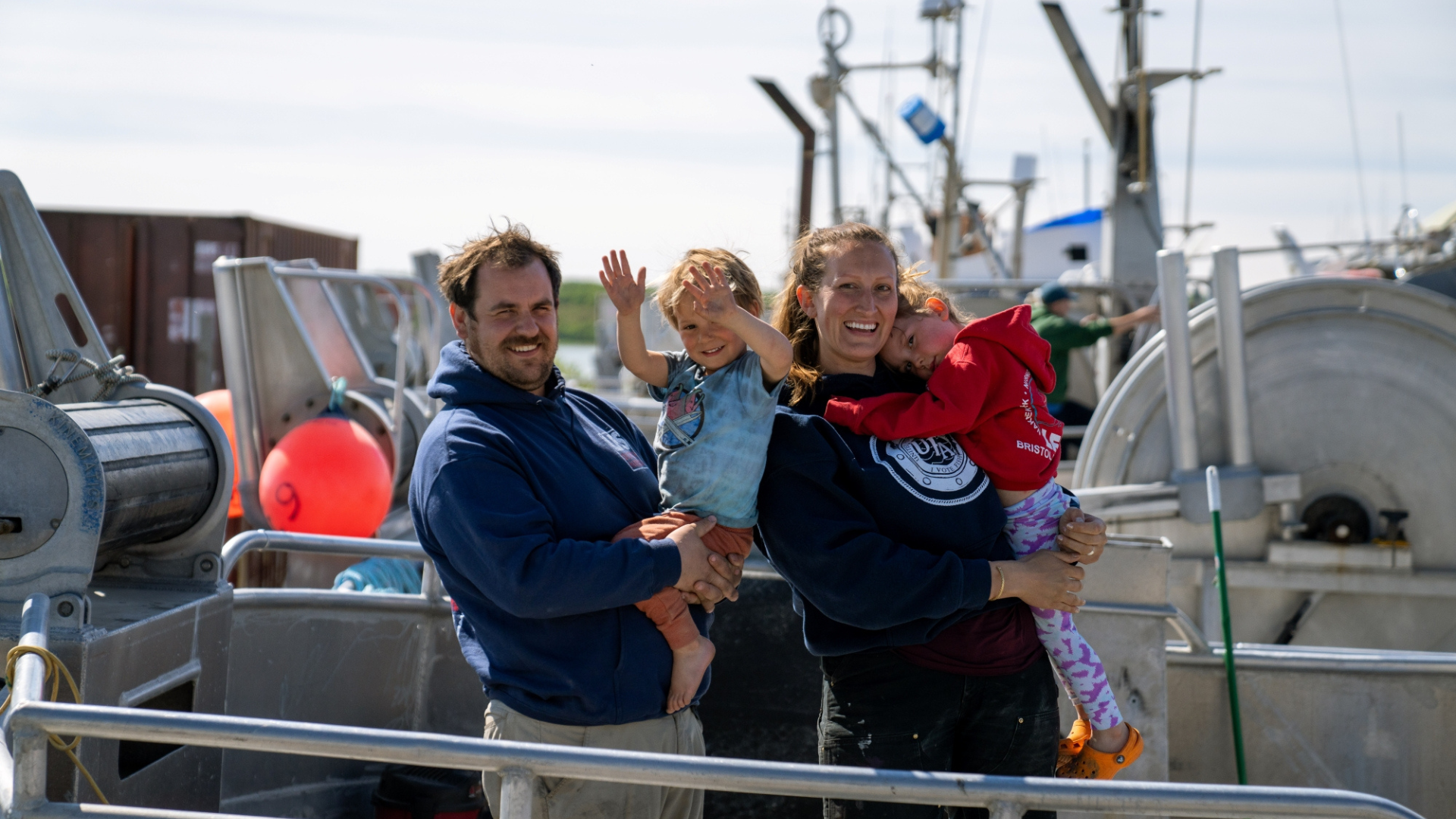
For Bristol Bay fisherman Reba Temple, commercial fishing has always been a way of life. She grew up inside the rhythms of the fishery, learned the trade beside her parents and siblings, and eventually stepped into her father’s wheelhouse to continue a family legacy that spans generations. Now, nearly 20 years after her first summer on deck, Reba is part of a growing community of women shaping the future of Alaska’s fisheries.


Reba’s connection to fishing began young. Each summer, she and her sister stayed with their grandparents in Wisconsin while their parents worked on the boat in Bristol Bay. By early high school, she and her siblings were spending full seasons on deck, eventually forming a complete family crew.
She remembers those summers as lively, cramped, and joyful. With so many siblings working together, even frustrating moments became funny in hindsight. Fishing was work, but it was also laughter, teamwork, and time spent getting to know her brother and sisters in a way that only long days on the water can create.
“It was always fun. Even when my dad would get mad at us, it was still fun. Being on the boat was just a really good way to get to know my brother and my sisters.”
The Temples built their family around fishing, and for Reba, those seasons shaped her childhood and future in ways she didn’t fully realize at the time.
Taking the Helm
When Reba lost her dad in 2013, she stepped up to run the boat she had grown up on. Being young and newly in charge could have been overwhelming, but her community supported her. Her family was well known in Bristol Bay, and many of her father’s friends offered kindness and encouragement during her early years in the wheelhouse.

She never felt pressured to prove herself or treated as though she did not belong. Instead, she felt welcomed and backed by a fleet that respected her family and trusted her ability.
“My dad’s friends were very kind, especially when I started running the boat right after he passed away. I never felt like people were trying to make me prove myself.”
Taking over the boat brought her closer to her siblings, who continued fishing with her, and allowed her to honor her dad in the place he had dedicated so much of his life to.
A Decade at the Helm and Building Female Crews

When Reba first started captaining, women running boats were still fairly uncommon. She remembers people pointing, surprised to see a woman in the wheelhouse. Over the last ten years, that landscape has changed dramatically. More women are fishing, more are running boats, and female crews have become increasingly visible throughout the fleet.
Reba became part of that change. Without setting out to do so, she ended up hiring mostly female crews. It happened naturally because she chose deckhands with strong work ethic, positive energy, and a willingness to help.

Her crews were upbeat, flexible, and eager to learn. She never had to navigate ego or competition, even during difficult seasons when boat issues tested everyone’s patience.
“They were just ready to work. They were excited to be there, willing to help, and there wasn’t any ego.”
For many of the women she hired, having a female captain made it easier to ask questions, build confidence, and find their footing in a male-dominated industry.
Being a Woman in Commercial Fishing
Reba’s own experience as a woman in the fishery has been largely positive. She acknowledges that not everyone has the same story, which is why she values the increased visibility and community among women in the industry today.

She often hears from women asking about boats, captains, or what to expect during their first seasons in Bristol Bay. Social media has made those connections easier, creating informal networks of advice and support that didn’t exist when she first started.
“When I first started, it was kind of a novelty. Now it’s just not. There are a lot more women running boats and working as crew.”
Reba has also been inspired by women working in more intense northern fisheries, including crab and pot cod. Watching them thrive has reinforced how much the industry continues to evolve.
Balancing Fishing and Family

Reba and her husband both fish, and they are raising four-year-old twins in Petersburg, Alaska. Life looks different now than it did a decade ago, and she is navigating the transition from running her own boat to fishing in ways that work for her family.
She hopes to bring her kids aboard for Southeast Alaska’s more predictable seine fishing schedule, slowly introducing them to the rhythms of life on the water. She imagines a future where fishing remains a shared family experience, just as it was for her growing up.

Her children already spend time around boats, and she hopes they grow up loving the same coastal lifestyle she and her husband cherish.
Advice for Women Entering the Industry
When asked what she would tell women who want to get into commercial fishing, Reba offers grounded, practical advice. Skills can be learned, she says, whether through marine safety classes, electrical courses, or on-the-job experience.
What matters most is attitude.
“Knowing how to work hard and keep a good attitude is way more important than knowing how to pick fish.”
She encourages women to ask questions, talk to captains, and rely on word-of-mouth when choosing boats. Most boats are good boats run by good people, and doing a little homework can make a big difference.
Above all, she wants new women entering the industry to know they are not alone.


